A casual Friday evening, a few drinks with friends — and before you realise it, you have consumed an extra 600 kcal in beverages alone. Alcohol is the most commonly forgotten calorie source for anyone paying attention to their nutrition. At 7 kcal per gram, alcohol calories sit closer to fat (9 kcal/gram) than to carbohydrates or protein (4 kcal/gram). And the uncomfortable truth: your body cannot use these calories for anything productive.
Key takeaways
- Alcohol contains 7 kcal per gram. That is nearly double the calorie density of carbohydrates and protein, and close to fat (9 kcal/gram).
- An average beer (330 ml) contains 145 kcal. Three beers in an evening is 435 kcal — comparable to a full meal.
- Cocktails are calorie bombs. A piña colada contains over 300 kcal per glass, mostly from sugar and cream.
- Alcohol temporarily slows your fat burning. Your body prioritises breaking down alcohol over burning fat.
- Dry wine and spirits with sugar-free mixers are the lightest options. A vodka soda contains approximately 97 kcal.
- Non-alcoholic beer contains 50 to 70 kcal per bottle. Considerably less than regular beer, but not calorie-free.
How many calories are in alcohol?
Pure alcohol (ethanol) contains 7 kcal per gram. But you rarely drink pure alcohol. The total calories per beverage depend on the alcohol percentage, serving size and added ingredients such as sugar, juice and cream.
Here is the overview per standard drink, based on data from the Voedingscentrum (Dutch Nutrition Centre), which describes alcohol as a source of "empty calories": energy without any nutritional value.
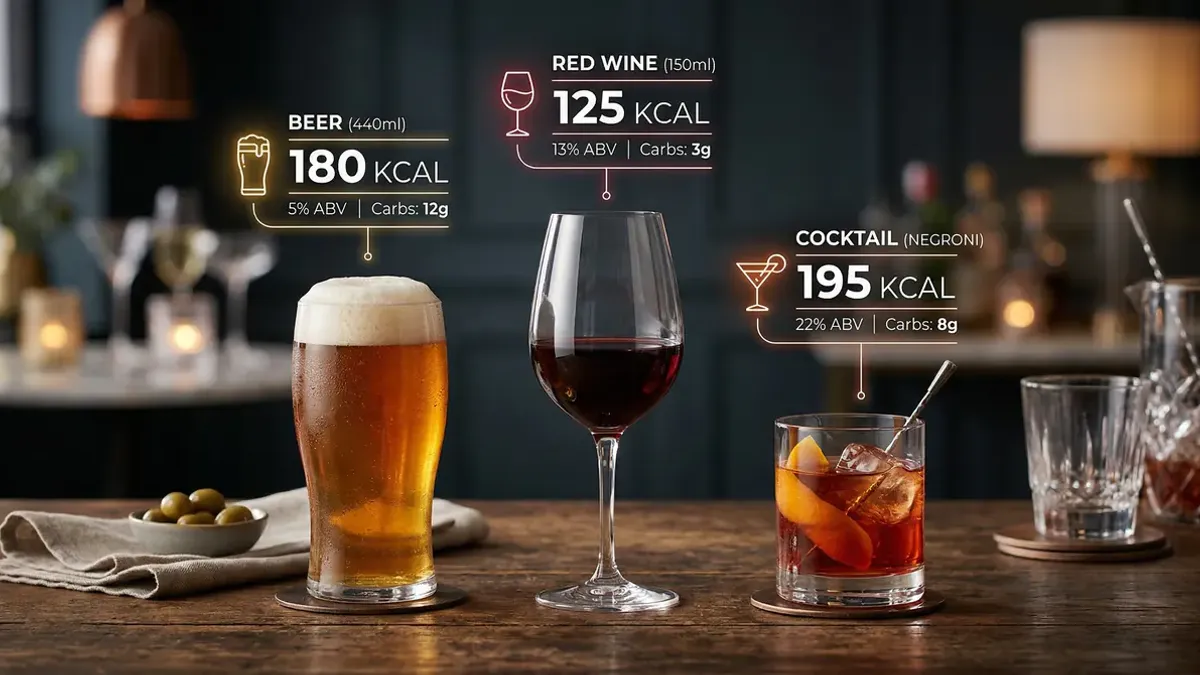
Beer (lager, 330 ml, 5%). 145 kcal. The standard pint. Three beers in an evening adds up to 435 kcal. Read the detailed beer comparison for wheat beer, IPA and strong ales.
Wheat beer (330 ml, 5%). 170 kcal. Slightly sweeter and heavier than lager due to the wheat content.
IPA (330 ml, 6.5%). Approximately 200 kcal. More alcohol means more calories. Some craft IPAs exceed 250 kcal.
Dry white wine (150 ml). 100 kcal. The lightest wine option. Dry wines contain less residual sugar.
Red wine (150 ml). 128 kcal. Slightly more than white wine due to higher alcohol percentages. See the full wine comparison for rosé and prosecco.
Sweet wine (150 ml). 160 to 180 kcal. The extra sugar makes a significant difference.
Gin and tonic (standard). 171 kcal. Most of the calories come from the tonic water, not the gin. Diet tonic cuts the calories roughly in half.
Mojito. 217 kcal. Sugar and lime syrup drive the calories up.
Piña colada. Over 300 kcal per glass. Coconut cream and pineapple juice make this one of the heaviest cocktails.
Vodka soda. 97 kcal. One of the lightest choices. A shot of spirit (40 ml) with a sugar-free mixer.
Non-alcoholic beer (330 ml). 50 to 70 kcal. Considerably lighter than regular beer, but not zero. The calories come from residual sugars and carbohydrates.
Why alcohol makes weight gain easier
The alcohol calories alone do not tell the full story. Alcohol has a compounding effect on your weight.
1. Alcohol slows your fat burning
When you drink alcohol, your liver prioritises breaking down ethanol. According to the Voedingscentrum (Dutch Nutrition Centre), this makes biological sense: alcohol is toxic and must be processed as quickly as possible. But while your liver focuses on alcohol, fat oxidation may temporarily decrease. That means the calories from your snacks and meals are more readily stored as fat.
2. Alcohol lowers your inhibitions
After a few drinks, you make less deliberate food choices. The bar snacks, the cheese platter, the late-night takeaway — these are calories you would normally skip. Research suggests that people consume an average of 300 to 500 extra food calories during and after drinking.
3. Alcohol provides no useful nutrients
Unlike carbohydrates, proteins and fats, alcohol delivers no building blocks, vitamins or minerals. They are purely "empty calories" — energy without nutritional value. Your body cannot store alcohol and must burn it immediately, putting everything else on hold.
4. Alcohol disrupts your sleep
Poor sleep increases your hunger the following day. Alcohol suppresses REM sleep, leaving you less rested when you wake. The result: stronger cravings for energy-dense snacks and less discipline with food choices.
Smarter drinking: how to limit the damage
Stopping entirely is the most effective approach for your calorie intake, but it is not the only option. Here are practical ways to reduce the impact.
Choose dry wines over sweet. Dry white wine contains approximately 100 kcal per glass. Sweet wine can reach 180 kcal. The difference over an evening with three glasses: 240 kcal.
Spirits with sugar-free mixers. Vodka soda (97 kcal) or gin with diet tonic (~90 kcal) are the lightest options. The mixer often makes the difference.
Alternate with water. One glass of water between each alcoholic drink halves your total intake and slows your pace. Bonus: less hangover.
Avoid cocktails with sugar. Piña colada, daiquiri and mojito contain 200 to 350 kcal per glass. That is comparable to a dessert.
Switch to non-alcoholic beer for later rounds. Start with one or two regular beers, then switch to non-alcoholic. You save 80 to 100 kcal per drink and keep the social atmosphere.
Set a limit before you start. Decide how many drinks you will have beforehand. Without a plan, it is easy to keep going.
What does this mean if you are losing weight?
If you are working with a calorie deficit, every calorie counts. Three beers (435 kcal) can completely eliminate your daily deficit. Two glasses of wine (256 kcal) do the same if your deficit is 300 kcal.
That does not mean you can never drink. But it helps to count alcohol consciously as part of your daily intake. Plan it in, just as you would plan a meal. Not sure how many calories you need per day? Start there.
Tracking your alcohol calories makes the difference. With calorie tracking, you gain insight into where your calories go — including Friday drinks.
Frequently asked questions
How many calories does a night out cost? Four drinks (mix of beer and wine) contain an average of 500 to 600 kcal. Add bar snacks and you quickly reach 800 to 1,000 extra kcal.
Is red wine healthier than beer? In terms of calories per standard drink, they are comparable. Red wine contains antioxidants, but the Voedingscentrum explicitly states that the claim that red wine is good for the heart has never been sufficiently proven, and that the overall health effects of alcohol are predominantly negative. Drinking more "for your health" is not recommended.
Does non-alcoholic beer also have calories? Yes. Non-alcoholic beer contains 50 to 70 kcal per 330 ml. The calories come from carbohydrates and residual sugars. It is considerably lighter than regular beer, but not calorie-free.
Can you compensate alcohol calories by eating less? Technically it works in terms of calories, but it is not advisable. Alcohol on an empty stomach hits faster, lowers your blood sugar and can lead to overeating later. Always eat a meal before drinking.
Sources
- Voedingscentrum — Alcohol (beer, wine and spirits)
- Voedingscentrum — How many calories do I burn?
- Voedingscentrum — Is red wine good for my heart?
Start drinking more mindfully
Alcohol does not have to leave your menu. But knowing how many calories it contains helps you make better choices. Moveno makes nutrition tracking effortless — snap a photo of your meal and keep track of your intake, Friday drinks included.