Oatmeal has become one of the most popular breakfast options in recent years. Overnight oats, warm porridge with fruit, or a quick smoothie — oats are everywhere. But what actually makes oatmeal so nutritious? And does its reputation as the "perfect breakfast" hold up when you look at the numbers?
Key takeaways
- Calories. 100g dry oatmeal contains roughly 389 kcal; prepared with water or milk this drops to ~71 kcal per 100g
- High in fiber. Oatmeal contains beta-glucan, a soluble fiber that may help lower LDL cholesterol and stabilise blood sugar
- Good protein source. With 13–17g protein per 100g dry, oatmeal is one of the most protein-rich grains available
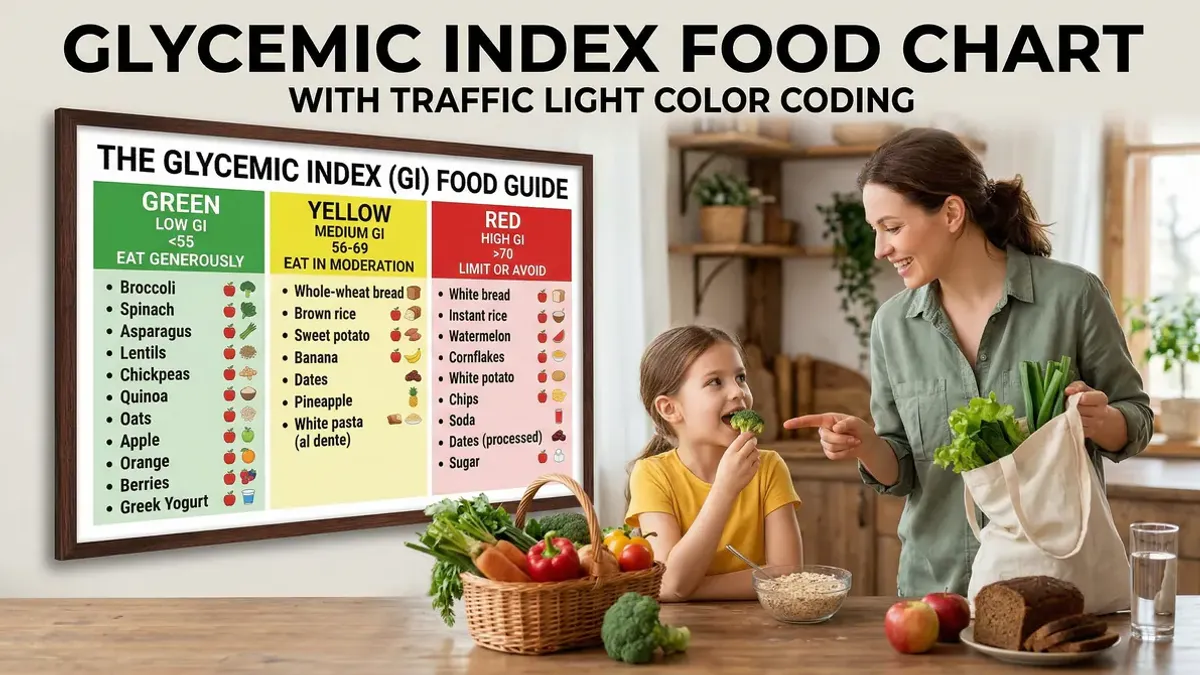
- Low glycemic index. The GI of oatmeal is roughly 55 — lower than white bread (GI ~75) or cornflakes (GI ~80). See our guide to the glycemic index for the full explanation
- Toppings determine the calories. Plain oatmeal is relatively low in calories; honey, peanut butter, granola, and sweetened fruit add up quickly
How many calories does oatmeal have?
Oatmeal has a very different calorie profile dry versus prepared:
| Form | Per 100g | Per serving (40g dry) |
|---|---|---|
| Dry rolled oats | ~389 kcal | ~156 kcal |
| Prepared with water (1:2) | ~71 kcal | ~156 kcal |
| Prepared with semi-skimmed milk | ~110 kcal | ~220 kcal |
| Overnight oats (with milk) | ~90–110 kcal | ~160–200 kcal |
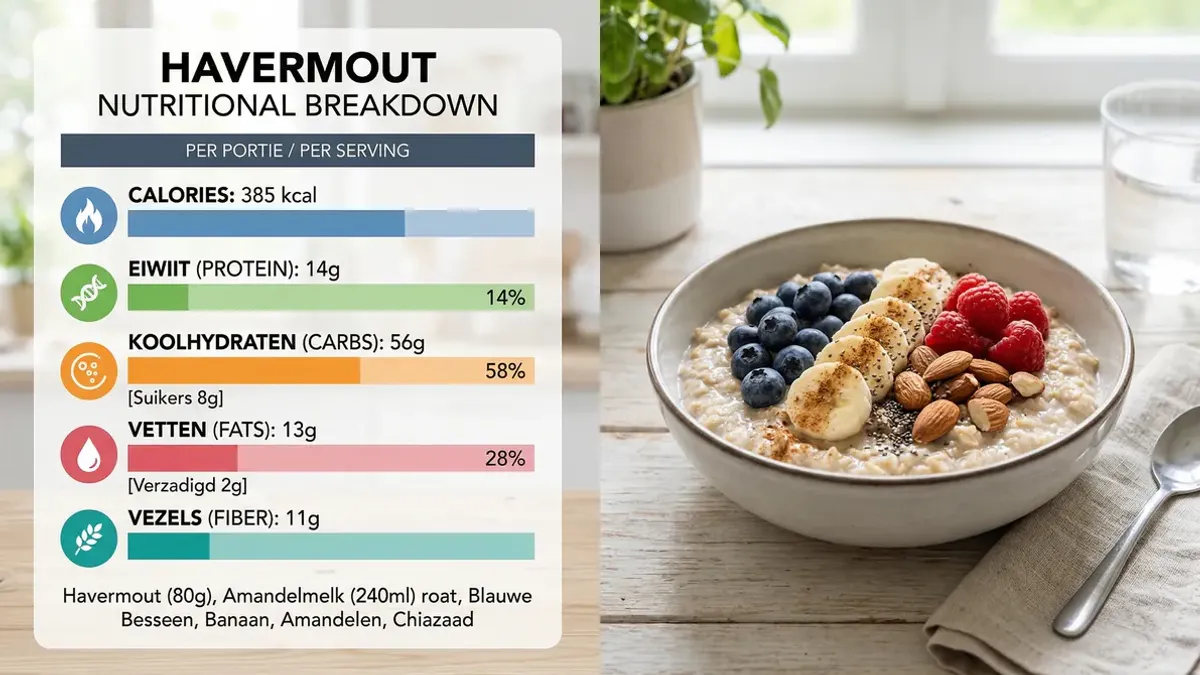
A standard portion of dry oatmeal is 40–50g, which amounts to roughly 156–195 kcal before toppings. With a tablespoon of honey (+45 kcal), a handful of nuts (+90 kcal), and a banana (+90 kcal), your breakfast can quickly reach 380–430 kcal — which is perfectly fine depending on your daily calorie needs.
Complete nutritional values per 100g dry oatmeal
Based on NEVO data:
| Nutrient | Per 100g dry |
|---|---|
| Energy | ~389 kcal |
| Carbohydrates | 66g |
| Of which fiber | 10–11g |
| Of which beta-glucan | ~4g |
| Protein | 13–17g |
| Fat | 7g |
| Of which saturated | 1.2g |
| Iron | ~4.7 mg |
| Magnesium | ~138 mg |
| Zinc | ~3.6 mg |
| Thiamine (B1) | ~0.8 mg |
Oatmeal is remarkably complete: it delivers carbohydrates for energy, protein for muscle maintenance, healthy fats, and a wide range of minerals. Few breakfast foods can match that profile.
Beta-glucan: the hidden power of oatmeal
Beta-glucan is a soluble fiber type unique to oats (and barley). It forms a gel in the intestines that may offer several benefits:
- Cholesterol reduction. EFSA recognises the claim that 3g of beta-glucan per day may help maintain normal LDL cholesterol levels. A 40g serving of oatmeal already provides roughly 1.6g of beta-glucan.
- Blood sugar stabilisation. Beta-glucan slows glucose absorption, leading to a more gradual rise in blood sugar.
- Satiety. The gel formation increases volume in the stomach and extends transit time, helping you feel full longer.
This makes oatmeal particularly relevant for people with type 2 diabetes or elevated cholesterol.
Oatmeal vs. other breakfast cereals
| Product (40g dry / 1 serving) | Calories | Protein | Fiber | GI |
|---|---|---|---|---|
| Oatmeal | ~156 kcal | 5–7g | 4–5g | ~55 |
| Cornflakes | ~152 kcal | 3g | 1g | ~80 |
| Muesli (sweetened) | ~150 kcal | 3.5g | 3g | ~66 |
| Granola | ~185 kcal | 4g | 3g | ~65 |
| Whole wheat bread (2 slices) | ~164 kcal | 7g | 4.6g | ~50 |
Oatmeal outperforms cornflakes and granola on fiber, protein, and glycemic index. Two slices of whole wheat bread are comparable in calories and protein, but you miss the beta-glucan benefit. For a protein-packed start to the day, also explore protein-rich foods.
Oatmeal and weight loss
Oatmeal is regularly recommended for weight management, and the reasons are well-founded. The combination of fiber (especially beta-glucan), protein, and complex carbohydrates creates sustained satiety. Research suggests that people who eat an oatmeal breakfast consume fewer calories throughout the rest of the day compared to a cornflakes breakfast.
That said, oatmeal is not a miracle food. Total calorie deficit over the day is always what matters. But as a breakfast option that keeps you satisfied until lunch, it is hard to beat.
Different types of oats: what are the differences?
| Type | Preparation | Fiber content | GI |
|---|---|---|---|
| Rolled oats (large flakes) | 5–10 min cooking | High | ~55 |
| Quick oats (fine flakes) | 2–3 min or microwave | Slightly lower | ~65 |
| Steel-cut oats | 20–30 min cooking | Highest | ~42 |
| Instant oatmeal (sweetened) | 1 min with water | Lower, more sugar | ~82 |
Steel-cut oats have the lowest glycemic index and highest fiber content, but require significantly more preparation time. Instant oatmeal is convenient but often contains added sugars — always check the label. Rolled oats or quick oats offer the best compromise for most people.
Oatmeal with different toppings: calorie overview
| Topping | Extra calories |
|---|---|
| 1 tbsp honey (15g) | +45 kcal |
| 1 tbsp peanut butter (15g) | +90 kcal |
| Half a banana (60g) | +54 kcal |
| Handful of berries (80g) | +35 kcal |
| 30g granola | +140 kcal |
| 1 tbsp maple syrup (15g) | +50 kcal |
| 25g chia seeds | +122 kcal |
A simple oatmeal breakfast (40g oats, berries, a pinch of cinnamon) comes to about 191 kcal. A heavily loaded bowl with peanut butter, granola, and honey quickly reaches 500+ kcal.
Practical tips
Prepare overnight oats the evening before
Overnight oats are soaked for at least 8 hours in milk or a plant-based drink. The benefits: more resistant starch, a lower GI, and a wonderfully creamy texture without cooking. Ideal when mornings are busy.
Choose unsweetened varieties
Check the label: many instant and flavoured oatmeal products contain 8–15g of added sugar per serving. Buy plain rolled oats and add your own fruit or a little honey.
Add extra protein
Oatmeal already contains 5–7g of protein per serving, but if you are physically active, adding quark, Greek yoghurt, or protein powder can help. It also improves satiety.
Weigh your portion
A standard serving is 40g dry — which looks like less than you might expect. Many people scoop out 60–80g, which significantly increases the calorie count.
Frequently asked questions
Is oatmeal healthy? Yes, oatmeal is one of the most nutritious breakfast options available. It provides complex carbohydrates, fiber (including beta-glucan), protein, and a broad spectrum of minerals.
Can I eat oatmeal while trying to lose weight? Yes. The combination of fiber and protein creates long-lasting satiety. Keep toppings in check — they determine the final calorie content of your breakfast.
Is oatmeal gluten-free? Oats themselves do not contain gluten, but are often processed in facilities that also handle wheat. If you have coeliac disease or gluten intolerance, choose specifically certified gluten-free oats.
How much fiber does oatmeal provide per day? A 40g serving of dry oatmeal contains roughly 4–5g of fiber, of which ~1.6g is beta-glucan. The recommended daily fiber intake is 30–40g.
Oatmeal: a breakfast that lives up to its reputation
Oatmeal earns its status as an outstanding breakfast. The science behind beta-glucan, the stable energy delivery from its low GI, and the impressive protein content for a grain make it an exceptional food. Choose the right type, keep toppings in check, and you have a breakfast that genuinely keeps you satisfied until lunch.
Want to track how many calories your breakfast contains? With Moveno, you photograph your bowl of oatmeal and instantly see all nutritional values. Try how simple calorie tracking can be.
Sources
- Dutch Food Composition Database (NEVO): nevo-online.rivm.nl
- Voedingscentrum, Oats: voedingscentrum.nl/encyclopedie/havermout
- EFSA Panel on Dietetic Products, Nutrition and Allergies, Beta-glucans and cholesterol: efsa.europa.eu
- Harvard T.H. Chan School of Public Health – Oats: hsph.harvard.edu/nutritionsource/food-features/oats