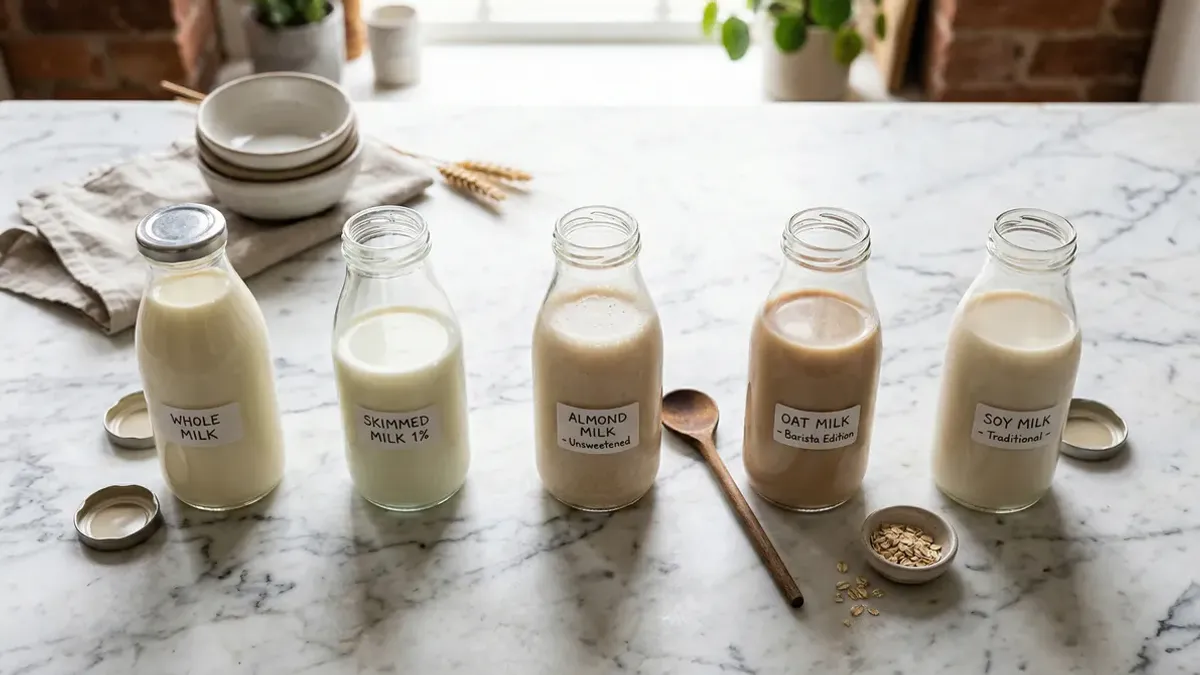
Milk with breakfast, a splash in your coffee, or a glass after exercise. Milk is one of the most consumed beverages worldwide. But if you are watching your intake, the choice between whole, semi-skimmed, and skimmed matters more than you might think. The difference can be as much as 64 kcal per glass.
Key takeaways
- Whole milk: 152 kcal per glass (250ml), with 8.5g fat and 8.2g protein.
- Semi-skimmed milk: 112 kcal per glass, with 3.5g fat and 8.5g protein.
- Skimmed milk: 88 kcal per glass, with 0.2g fat and 9.3g protein.
- Protein stays nearly constant. All three types deliver 8 to 9 grams of protein per glass.
- The difference is in the fat. Whole milk has 8.5g fat per glass; skimmed milk just 0.2g.
How many calories are in milk?
The Voedingscentrum (Dutch Nutrition Centre) uses a standard glass of 250ml. Here are the calories per serving for the three most common varieties:
| Milk type | Per glass (250ml) | Per 100ml |
|---|---|---|
| Whole milk | 152 kcal | 61 kcal |
| Semi-skimmed milk | 112 kcal | 45 kcal |
| Skimmed milk | 88 kcal | 35 kcal |
Source: Voedingscentrum (Dutch Nutrition Centre)
The gap between whole and skimmed is 64 kcal per glass. If you drink two glasses a day, switching from whole to skimmed saves over 900 kcal per week. That is roughly equivalent to an entire meal.
What is the full nutritional comparison?
Milk delivers far more than just calories. Here is the detailed comparison per glass (250ml):
| Nutrient | Whole | Semi-skimmed | Skimmed |
|---|---|---|---|
| Energy | 152 kcal | 112 kcal | 88 kcal |
| Fat | 8.5g | 3.5g | 0.2g |
| Saturated fat | 5.5g | 2.3g | 0.2g |
| Carbohydrates | 11.2g | 11.8g | 12.2g |
| Sugars | 11.2g | 11.8g | 12.2g |
| Protein | 8.2g | 8.5g | 9.3g |
| Salt | 0.26g | 0.26g | 0.28g |
Source: Voedingscentrum (Dutch Nutrition Centre)
A few things stand out. Protein content rises slightly as fat content drops. Skimmed milk actually contains a little more protein (9.3g) than whole milk (8.2g) per glass. Carbohydrates (mostly lactose, the natural milk sugar) remain similar across all three types.
Which milk type fits your goal?
The right choice depends on what you are trying to achieve.
1. Weight loss or maintaining a calorie deficit
Choose semi-skimmed or skimmed milk. The lower fat content saves calories while you still get protein and calcium. A glass of semi-skimmed saves 40 kcal versus whole; skimmed saves 64 kcal.
Want to know exactly how many calories you need per day? Read our guide on calculating your daily calorie needs.
2. Muscle building or higher protein needs
Skimmed milk is surprisingly strong here. With 9.3g protein per glass and just 88 kcal, it offers the best protein-to-calorie ratio. Two glasses of skimmed milk deliver 18.6g protein for only 176 kcal.
3. General health without a specific target
Most nutrition guidelines recommend semi-skimmed milk as the default. It is the middle ground: less saturated fat than whole, more flavour than skimmed, and a solid balance of nutrients.
How do other dairy products compare?
Milk is not the only dairy product in your day. Here is a comparison with related products per 100 grams:
| Product | Calories per 100g | Protein per 100g |
|---|---|---|
| Whole milk | 61 kcal | 3.3g |
| Semi-skimmed milk | 45 kcal | 3.4g |
| Skimmed milk | 35 kcal | 3.7g |
| Buttermilk | 36 kcal | 3.3g |
| Yoghurt (semi-skimmed) | 50 kcal | 4.5g |
| Cottage cheese | 90 kcal | 11g |
Yoghurt and cottage cheese provide more protein per calorie than milk. They can be a smart addition if you want to increase your protein intake. Cheese is a different story entirely, with 350 to 400 kcal per 100g for most hard varieties.
Does the milk in your coffee matter?
Yes, especially if you drink several cups a day. A standard splash of milk in coffee is roughly 30 to 50ml. Here is what that adds:
| Amount | Whole | Semi-skimmed | Skimmed |
|---|---|---|---|
| Small splash (30ml) | 18 kcal | 13 kcal | 11 kcal |
| Generous splash (50ml) | 30 kcal | 22 kcal | 18 kcal |
| 4 cups per day (50ml each) | 122 kcal | 90 kcal | 70 kcal |
At four cups of coffee a day with a generous splash of whole milk, you reach 122 kcal from milk alone. Switching to semi-skimmed saves 32 kcal per day; skimmed saves 52 kcal. Small adjustments, but they add up over a week.
Frequently asked questions about milk calories
Does plant-based milk have fewer calories? It depends on the type. Unsweetened almond milk contains around 13 kcal per 100ml, significantly less than cow's milk. Soy milk sits closer to semi-skimmed cow's milk at about 40 to 45 kcal per 100ml. Oat milk varies widely: 40 to 60 kcal per 100ml. Note that plant-based alternatives often contain less protein and calcium unless fortified.
Is whole milk unhealthy? No. Whole milk contains more saturated fat but also delivers fat-soluble vitamins (A, D, E, K). Nutrition guidelines generally recommend semi-skimmed as the default, but whole milk is not inherently unhealthy. It depends on your overall diet and goals.
How much milk can you drink per day? Most guidelines recommend two to three servings of dairy per day. One serving equals a glass of milk (250ml), a bowl of yoghurt, or a slice of cheese. Within that guideline, milk fits comfortably into a healthy eating pattern.
Does the milk in my coffee count toward my calorie intake? Yes. Every calorie counts, including those from coffee milk. With multiple cups a day, it adds up, as the table above shows. Tracking your food intake helps make these hidden calories visible.
Make a smarter choice at your next glass
The difference between whole and skimmed milk looks small per glass but compounds over a day and a week. Now that you know the numbers, you can make a conscious choice that matches your goals.
Want an easy way to track what you drink and eat? Moveno recognises your meals from a photo and calculates everything, including that glass of milk at breakfast.