Key takeaways
- Brown sugar and white sugar are nutritionally almost identical.
- Brown sugar contains slightly more molasses, giving it a richer flavour and minimal amounts of minerals — but not enough to make a nutritional difference.
- Brown sugar contains approximately 380 kcal per 100 g; white sugar approximately 400 kcal — a difference of less than 1 kcal per teaspoon.
- Both types have a similar glycaemic index (~64–68) and both count as free sugars under the WHO guideline.
- The choice between brown and white sugar is a flavour choice, not a health choice.
Many people reach for brown sugar in the conviction that it is healthier than white. It looks more "natural", smells different, and sounds better. But is that belief justified?
What is brown sugar, exactly?
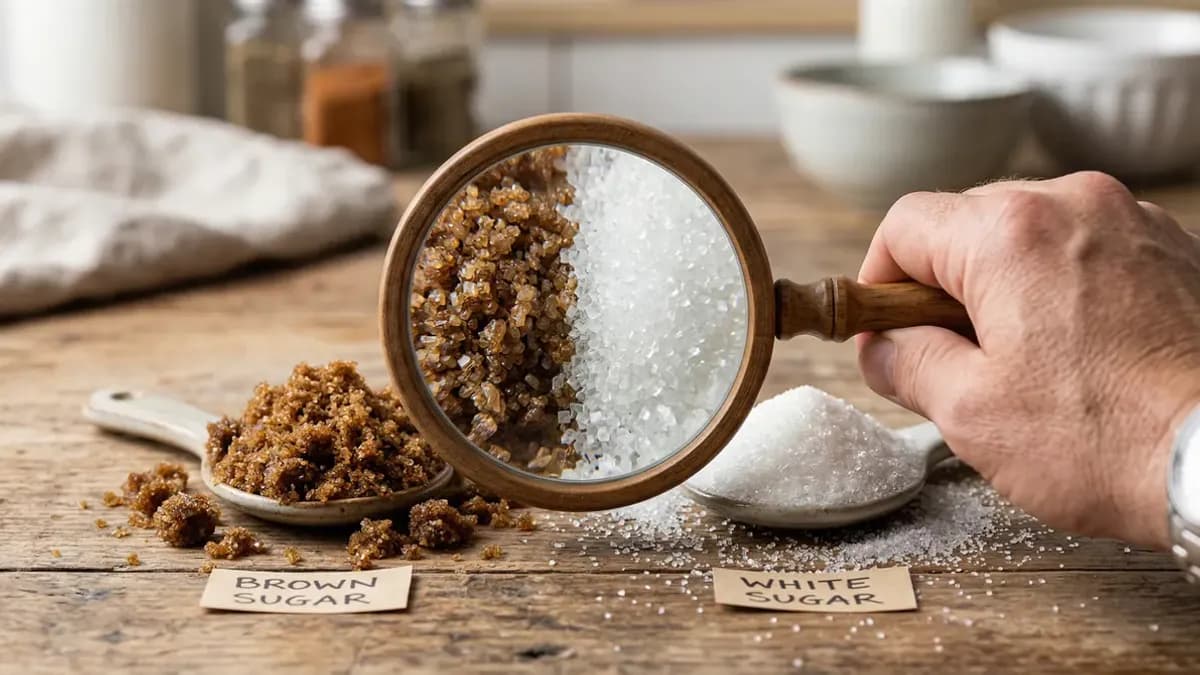
Sugar — whether brown or white — is sucrose: a disaccharide made up of glucose and fructose, extracted from sugar beet or sugar cane.
White sugar is further refined until all molasses has been removed. The result: pure, white, crystalline sucrose.
Brown sugar gets its colour in one of two ways:
- Raw cane sugar: molasses was never fully removed — it is a less refined product
- Added molasses: white sugar to which molasses has been blended back in to provide colour and flavour
Calories and nutritional values compared
| Nutrient | White sugar (per 100 g) | Brown sugar (per 100 g) |
|---|---|---|
| Energy | ~400 kcal | ~380 kcal |
| Carbohydrates | ~100 g | ~98 g |
| Protein | 0 g | 0 g |
| Fat | 0 g | 0 g |
| Calcium | ~1 mg | ~83 mg |
| Iron | ~0.1 mg | ~1.9 mg |
| Potassium | ~2 mg | ~346 mg |
The calorie difference (20 kcal per 100 g) is statistically real but practically irrelevant — in one teaspoon (~4 g), the difference is less than 1 kcal.
The minerals in brown sugar look impressive in a table. In reality, the amounts are too small to contribute to your daily needs.
What do nutrition authorities say?
Dutch nutrition authority Voedingscentrum is clear: cane sugar is not healthier than refined sugar. The mineral amounts are so low that they do not contribute to daily recommendations. The choice is purely a matter of taste.
The Dutch Diabetes Foundation similarly confirms that cane sugar and refined sugar fall into the same category for people with diabetes. Both types raise blood sugar in comparable ways and should be used in moderation.
Glycaemic index: is there a difference?
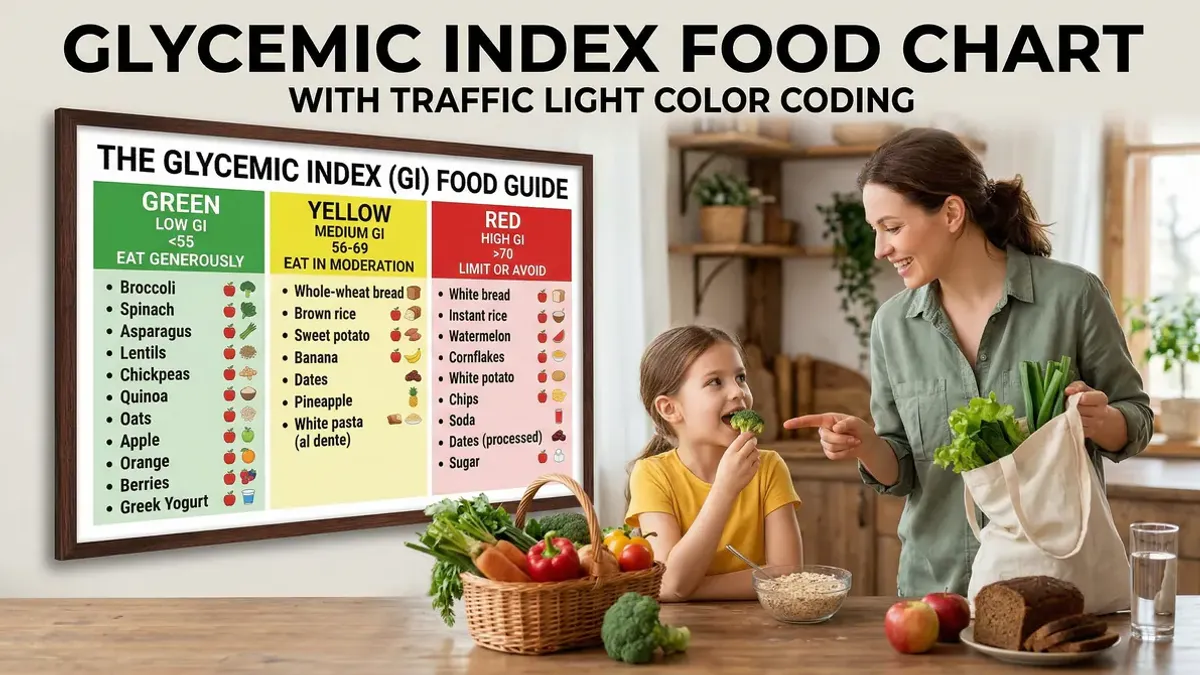
The glycaemic index (GI) measures how quickly a food raises blood sugar. White sugar has a GI of approximately 65–68. Brown sugar sits at approximately 64–65. The difference is practically negligible — both types raise blood sugar quickly.
Other "healthy" sugars: also not healthier
Coconut blossom sugar: contains slightly more minerals, has a somewhat lower GI (~54), but still counts as a free sugar. Mineral amounts are too small to be relevant.
Agave syrup: contains up to 85% fructose, which is processed by the liver and contributes to fatty liver disease with overconsumption.
Honey: contains fructose, glucose, and small amounts of antioxidants. Counts as a free sugar per the WHO. Nutritionally similar to table sugar.
Maple syrup: contains small amounts of manganese and zinc. Counts as a free sugar.
All of the above are free sugars and count towards the WHO guideline of a maximum of 25 grams per day.
When should you choose brown sugar?
Not for health reasons — but for flavour. Brown sugar has a richer, slightly caramel-like taste due to the molasses. That makes it popular in:
- Gingerbread, speculaas, and other traditional baked goods
- Marinades for meat or vegetables
- Porridge (the flavour dimension works well)
In recipes calling for neutral sweetness — such as whipped cream, custard, or light cakes — white sugar is preferable, as brown sugar affects both colour and flavour.
The real question: how much sugar are you eating?
Brown or white sugar — the quantity matters far more than the type. The WHO recommends a maximum of 25 g of free sugars per day. Read more in our article on [how much sugar per day](/en/blog/suiker-per-dag).
If you want to know what chronically high sugar intake does to the body, see our article on high blood sugar symptoms.
Brown sugar is not healthier than white sugar. Both types contain virtually the same calories, the same glycaemic index, and the same amount of free sugars. The minerals in brown sugar are present, but in amounts too small to be nutritionally meaningful. Choose brown sugar if you prefer the taste — not as a health measure.
Sources: Voedingscentrum – Is cane sugar healthier?, Diabetesfonds – Is cane sugar healthier?, BNNVARA Kassa – Brown vs white sugar