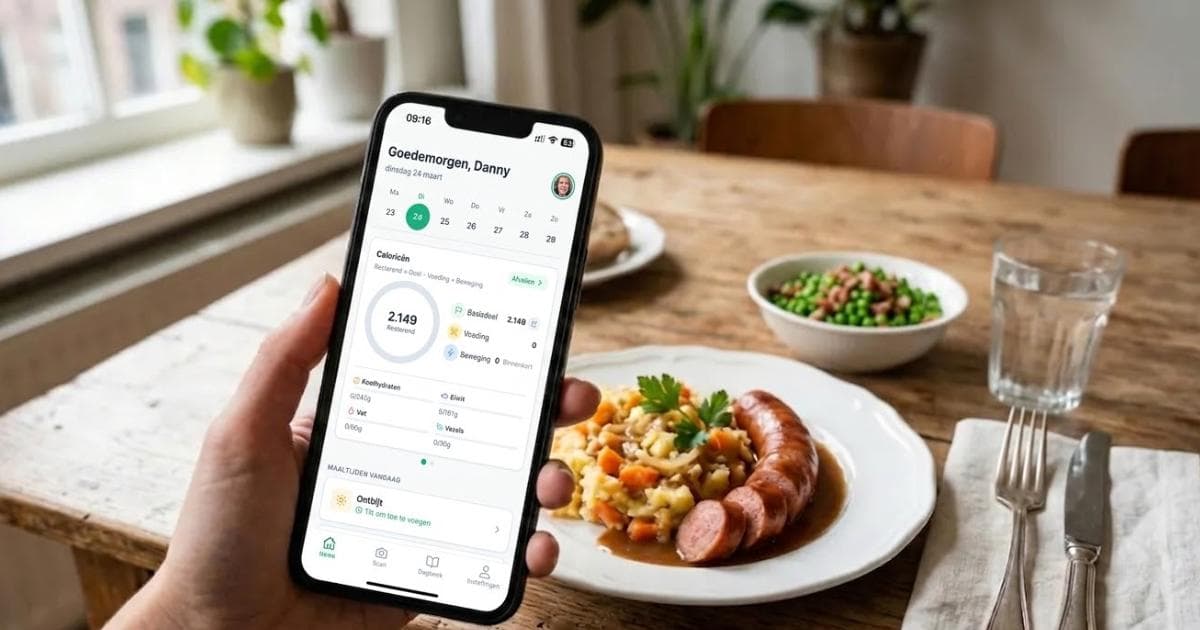
You want to eat more mindfully. Maybe you want to lose weight, maybe you just want to know what is in your dinner. So you download a calorie app. Then the frustration begins: searching manually, English-only product names, nutrition data that does not match what you actually eat. After three days, you give up.
That is the problem Moveno set out to solve. In this article, we give an honest overview of what the app does, how the technology works, and who Moveno is built for. No sales pitch, just a clear walkthrough.
Key takeaways
- AI photo recognition. Take a photo of your meal and Moveno identifies the ingredients within seconds.
- Dutch nutrition database. Nutrition data based on the official NEVO database from RIVM, supplemented with over 85,000 foods from Dutch and European sources.
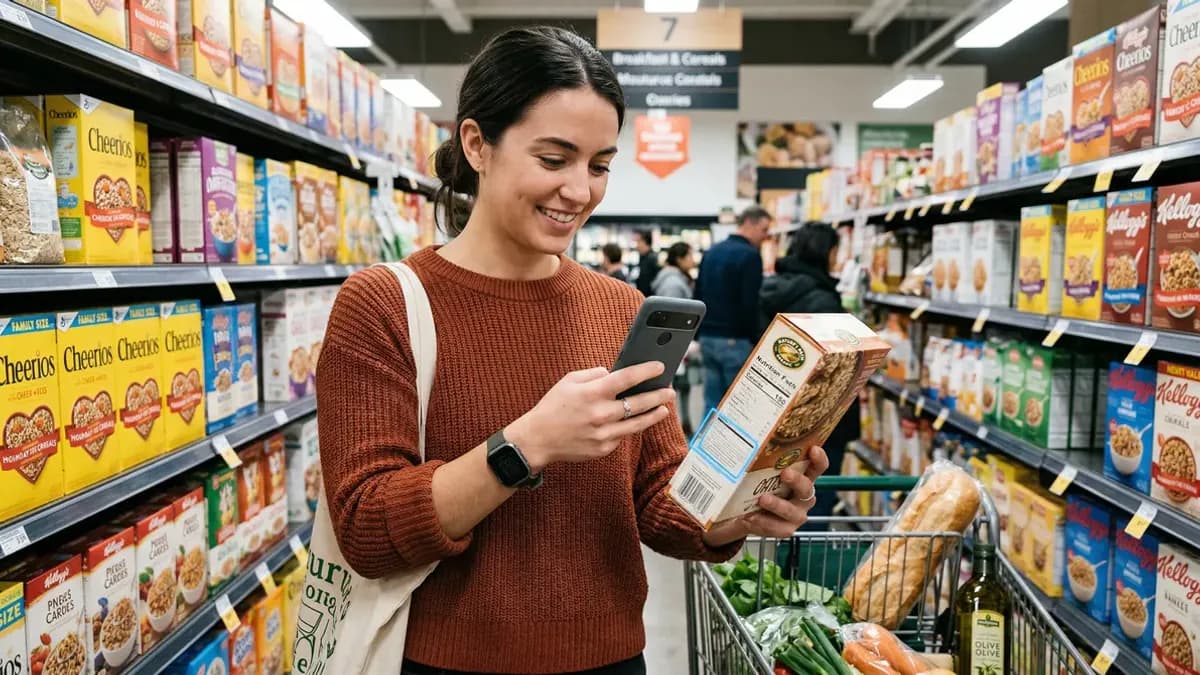
- Barcode scanning. Scan packaged products for instant nutrition information.
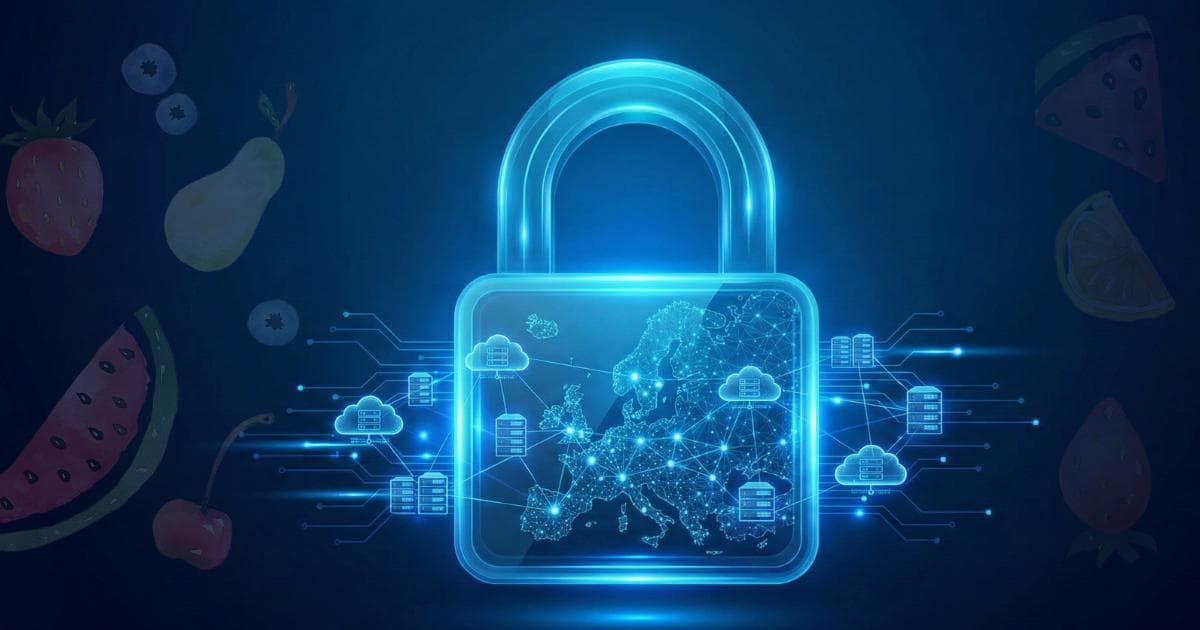
- Privacy-first. All data stored on EU servers in Frankfurt, fully GDPR-compliant.
- Country-aware. Enable GPS detection and the app prioritises foods from the country you are in.
- Free to try. Three AI scans per day on the free plan, no strings attached.
What is Moveno?
Moveno is a Dutch AI-powered app that lets you track your nutrition by simply taking a photo of your food. The app is designed specifically for the Dutch market. That means a Dutch-language interface, Dutch nutrition data, and recognition of dishes that other apps do not understand.
The app does not promote crash diets or strict meal plans. Moveno is a tool for insight. You see what you eat, how many calories and nutrients it contains, and you make your own choices based on that information. Read more about how calorie tracking works in our comprehensive guide.
How does the AI photo recognition work?
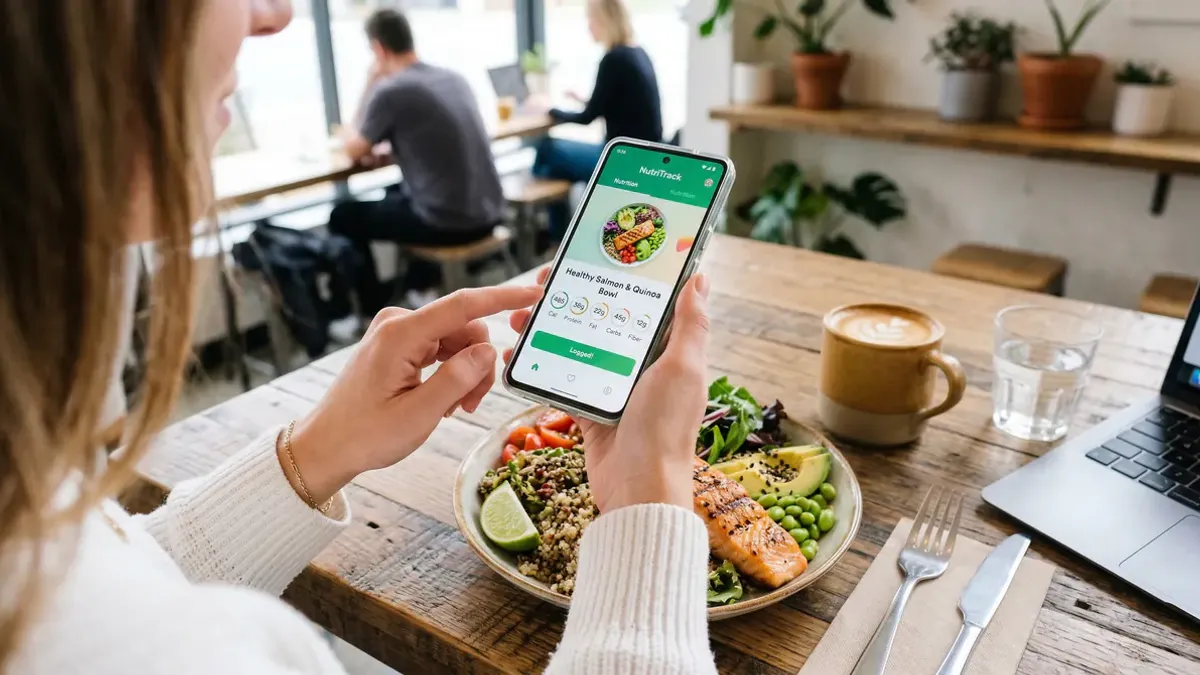
The core idea is simple: you take a photo of your meal and the AI analyses what is on your plate.
Behind the scenes, it is significantly more complex. Moveno uses one of the fastest AI vision models available. Recognition happens within seconds. The AI identifies not just what you are eating, but also estimates portion sizes and calculates nutrition data accordingly.
1. Take a photo
You open the camera in the app and photograph your meal. The app also accepts photos from your gallery, which is useful if you already took a picture earlier.
2. AI analysis
The AI model analyses the image and identifies individual ingredients. For a plate of stamppot with rookworst (smoked sausage), the AI recognises the mashed potatoes, the kale, and the sausage as separate components.
3. Nutrition lookup
The recognised ingredients are matched against the nutrition database. This is where the system's strength lies: the nutrition data does not come from a generic international source, but from the NEVO database and other verified sources.
4. Results and corrections
You immediately see the calories and nutritional breakdown. Something not right? You can manually adjust the values. That correction is saved and improves future recognitions.
Why does a Dutch database matter?
Most calorie apps use American nutrition databases. That is a problem when you eat in the Netherlands. A cheese sandwich in the USDA database assumes American bread, American cheese, and American portion sizes. The difference can be more than 30 percent.
Moveno uses the NEVO database as its foundation. NEVO stands for Nederlands Voedingsstoffenbestand (Dutch Food Composition Database) and is maintained by RIVM, the Dutch National Institute for Public Health. The database contains nutrition data for 2,328 Dutch foods, based on chemical analysis. No user-submitted entries, no estimates.
On top of that, Moveno has a database of over 85,000 foods from multiple sources:
- NEVO. 2,328 scientifically analysed Dutch foods.
- Open Food Facts. Over 60,000 European supermarket products with barcode matching.
- USDA. 8,158 generic foods as supplementary data.
- Supermarket products. Thousands of products from Albert Heijn, Jumbo, Lidl, Plus, and other Dutch chains.
This means that when you photograph a broodje kroket (a Dutch croquette sandwich), the nutrition data is based on actual Dutch product data. Not on an American estimate of "fried meat roll."
How does country-aware recognition work?
Moveno started as a Dutch app, but the food database is growing internationally. The app features a smart country detection system: when you enable it, Moveno uses GPS to detect which country you are in and prioritises foods from that country.
Say you are in Germany. The app detects that you are in Germany and searches the German product database first. This matters: German Vollkornbrot is a very different product from Dutch volkorenbrood (wholegrain bread). Different ingredients, different preparation, different nutrition values. By showing the correct version, you get more accurate information.
The same applies to products from German supermarkets like Edeka, REWE, Lidl, and Kaufland. They are in the database with their original German names and nutrition data, so you recognise them immediately.
Country detection is entirely optional and privacy-friendly. Your location is not stored and is only used to prioritise search results. Not enabled? The app searches the full database without any country preference.
How does barcode scanning work?
In addition to photo recognition, you can scan packaged products via barcode. The app supports standard barcode formats: EAN-13, EAN-8, CODE-128, and UPC-A. That covers virtually all packaged products in Dutch supermarkets.
The process is straightforward: point the camera at the barcode, the app identifies the product, and displays the nutrition information. For products not yet in the database, you can manually enter the values from the label. Those values are then saved for future use.
What does Moveno do with your privacy?
With an app that tracks your eating habits, privacy is a legitimate concern. Nutrition data falls under GDPR as a special category of personal data. That imposes strict requirements on how it is stored and processed.
Moveno stores all data in the European Union, specifically in Frankfurt. Sessions are encrypted with AES-256 encryption. No personal data is stored in log files: user IDs are hashed and search queries are not logged.
In practical terms, that means:
- EU servers. Data is stored in Frankfurt, under full GDPR protection.
- Encrypted sessions. AES-256 encryption for all user sessions.
- No personal data in logs. Hashed logging, no raw user data.
- Right to deletion. You can request deletion of your account and all associated data at any time.
Read more about privacy and nutrition data in calorie apps.
What is free and what does premium cost?
Moveno offers a free plan that lets you try the app without any commitment.
Free plan:
- Three AI scans per day. Enough to experience the photo recognition.
- Barcode scanning. Unlimited scanning of packaged products.
- Manual entry. You can always add food manually.
- Three days of diary history. Review your recent nutrition intake.
Premium plan:
- Unlimited AI scans. No daily limit on photo recognition.
- 365 days of diary history. Full overview across the entire year.
- Extended weight chart. Track long-term trends.
- Five-week calendar overview. Broader insight into your eating patterns.
The free version is deliberately not a stripped-down trial. Three scans per day is enough to track your main meals. The premium plan adds long-term insight for those who are more serious about tracking their nutrition.
Who is Moveno for?
Moveno is built for anyone who wants more insight into what they eat. Whether you want to lose weight, build muscle, or simply eat more mindfully: it all starts with knowing what is on your plate.
- Eating more mindfully. You want to know what is in your stamppot, sandwich, or bittergarnituur without the hassle.
- Starting fresh with tracking. Previous attempts with calorie apps failed because of the manual work. Photo recognition makes it easy enough to stick with.
- Accurate data. You want the calories in your hagelslag op brood to be correct, not estimated from Hershey's chocolate sprinkles.
- Simply curious. You do not need a specific goal. Insight into your nutrition can be valuable even if you are not looking to change anything.
We are building Moveno to be easy for everyone to use, regardless of your experience with nutrition tracking.
Frequently asked questions
Is Moveno free?
Yes, Moveno offers a free plan with three AI scans per day, unlimited barcode scanning, and manual entry. There is no trial period: the free plan remains available indefinitely.
How accurate is the AI photo recognition?
Accuracy depends on the dish. Clearly identifiable, separately plated foods give the best results. Mixed dishes or unusual preparations are more challenging. You can always manually correct if the AI gets it wrong.
What data sources does Moveno use?
Moveno uses the NEVO database from RIVM as its foundation, supplemented with Open Food Facts, USDA data, and manually verified Dutch supermarket products. Over 85,000 foods in total.
Can I use Moveno in English?
Yes, the app is available in both Dutch and English. The nutrition data remains the same, only the interface language changes.
Try Moveno and find out what you eat
If you are looking for a way to track your nutrition that actually understands what you eat, Moveno is worth trying. No English-only search results, no American portion sizes, no estimated nutrition values.
Just a photo of your plate. And then knowing what is in it.
Join the waitlist and be the first to try it.