You snap a photo of your plate and within seconds, all the nutritional information appears on your screen. It sounds like magic, but behind AI calorie tracking lies sophisticated technology that's getting smarter every day.
Key takeaways
• AI calorie tracking uses computer vision to recognize food in photos with 85-95% accuracy • The technology combines image recognition, portion size estimation, and connection to nutrition databases • Machine learning algorithms continuously improve through user data and feedback • Modern AI systems can distinguish multiple ingredients within a single dish • The technology works in three steps: image analysis, food identification, and nutrition calculation • Local optimization makes apps more accurate for regional cuisines and eating habits
What exactly is AI calorie tracking?
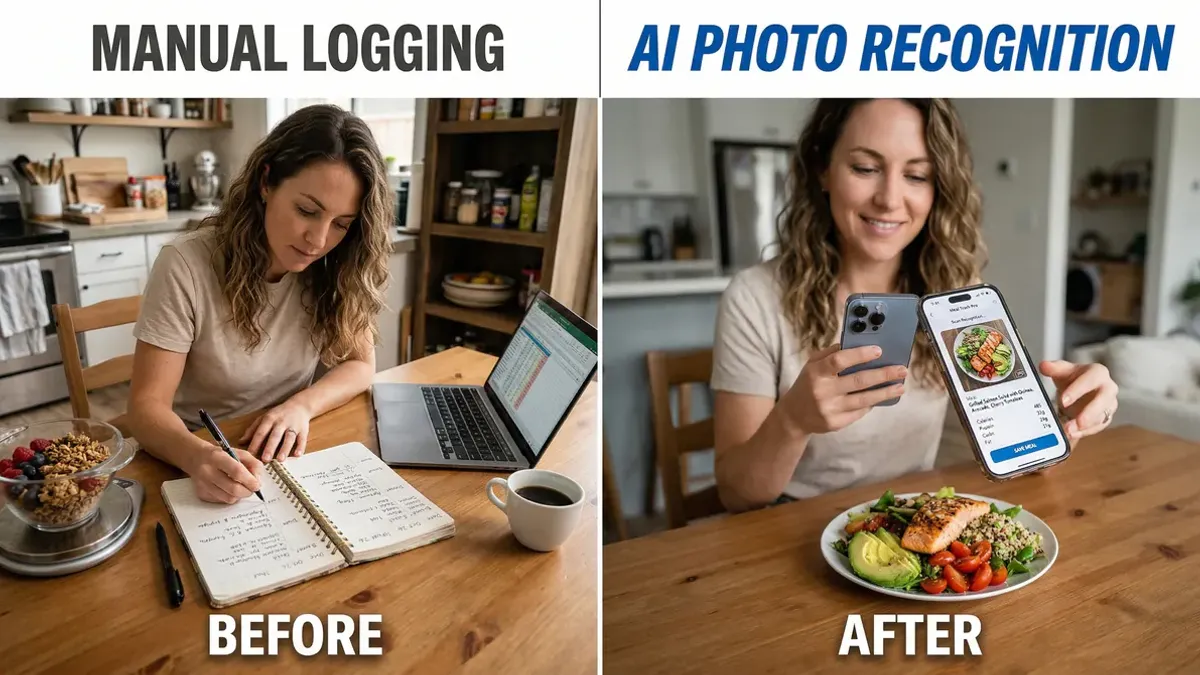
AI calorie tracking is technology that uses artificial intelligence to automatically recognize food and calculate its nutritional values. Instead of manually logging everything, you simply take a photo.
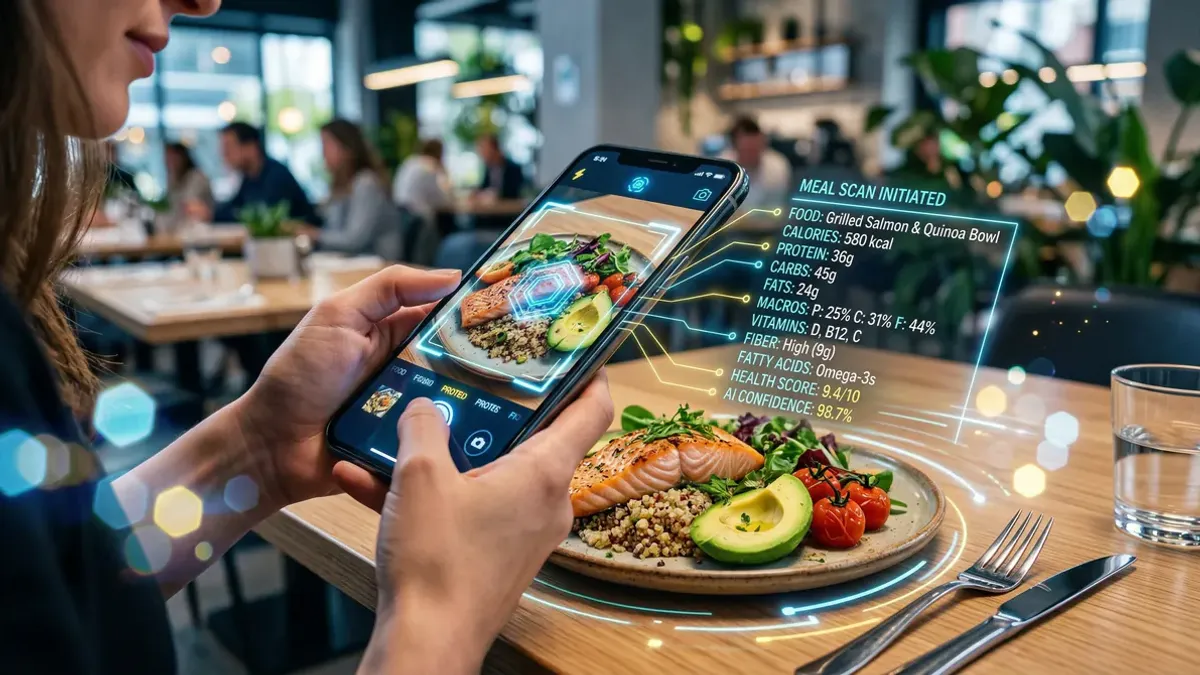
The AI analyzes your photo and identifies what you're eating. Think of a sandwich with cheese, a bowl of pasta, or even complex dishes like stir-fry. The system estimates quantities and automatically calculates calories, protein, carbohydrates, and fats.
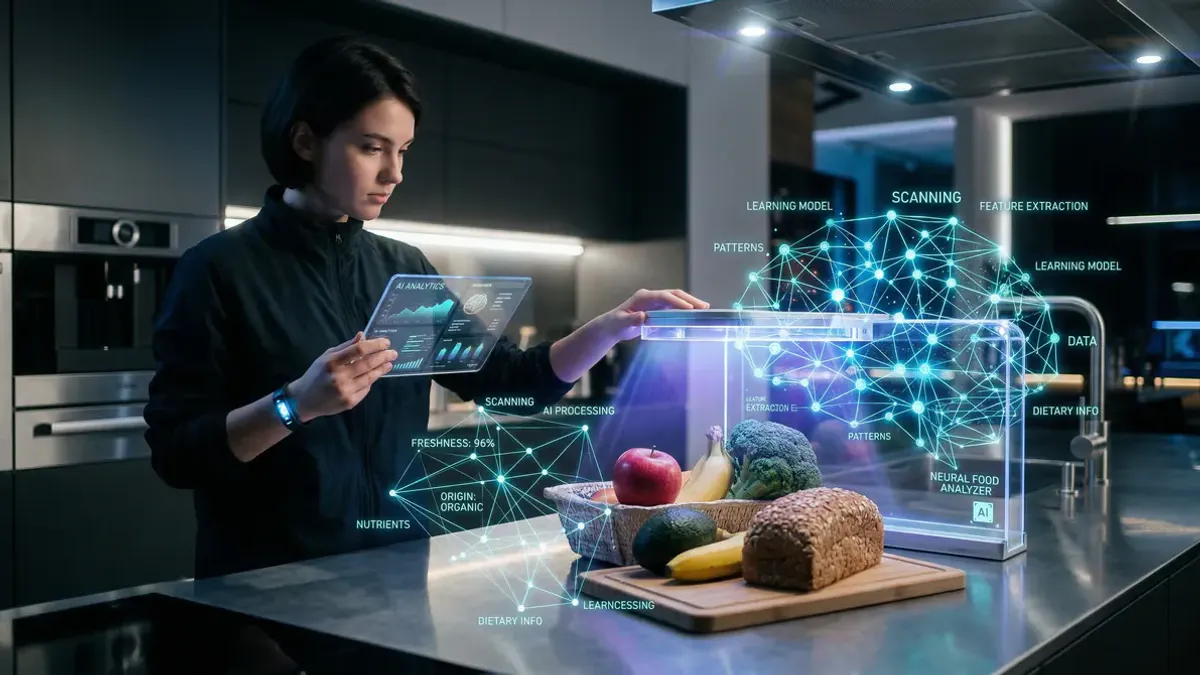
This technology combines several AI techniques: computer vision for image recognition, machine learning for pattern recognition, and deep learning for continuous improvement.
How does AI recognize food in photos?
Food recognition happens in multiple layers, each with a specific task.
Computer vision. This forms the foundation of AI calorie tracking. The system analyzes pixels, colors, shapes, and textures in your photo. An apple has a round shape and smooth texture, while broccoli has a tree-like structure.
Pattern recognition. The AI compares what it sees with thousands of examples from its training data. Modern systems are trained on vast databases containing everything from basic ingredients to complex prepared meals.
Context analysis. Smart systems also look at the environment. An orange ball on a plate is probably an orange, not a tennis ball.
Ingredient separation. Advanced AI can even break down complex dishes. A casserole gets recognized as separate components - vegetables, protein, and starches - each with their own nutritional values.
How does AI estimate portion sizes?
Portion size estimation is one of the biggest challenges in AI calorie tracking. Several techniques make this possible.
Reference points. The AI looks for known objects in your photo as measuring tools. A fork, plate, or hand indicates how large other items are.
Depth analysis. Advanced systems estimate the depth of food. A mound of rice looks different from a thin layer.
Statistical models. The AI uses average portion sizes from nutrition research. A standard slice of bread is typically 28-35 grams, for example.
Machine learning corrections. As more people use the app, the system learns from their feedback and becomes more accurate in its estimates.
What role does the nutrition database play?
Without a good database, even the best AI is useless. The nutrition database forms the heart of every calorie counting app.
Comprehensive coverage. Modern databases contain nutritional information for thousands of foods, from basic ingredients to branded products and restaurant meals.
Product matching. The AI links recognized food to specific database entries. An apple gets matched to "apple, peeled" or "apple, with skin" depending on what the system detects.
Brand recognition. Advanced systems can even recognize specific brands and their unique nutritional profiles.
Continuous updates. Databases are regularly updated with new products and improved nutritional information.
Why is AI calorie tracking getting more accurate?
The power of AI lies in its ability to learn and improve. Every photo users take helps the system become smarter.
User feedback. When you correct a recognition, the AI learns from this feedback. Next time, the system recognizes that dish better.
More training data. The more photos the system sees, the better it becomes at recognition. An AI that has seen thousands of pasta photos recognizes this food more reliably.
Algorithm improvements. Developers continuously improve the underlying algorithms for better recognition and more accurate estimates.
Regional optimization. AI systems can be specifically trained on local cuisines, which increases accuracy for regional foods and eating patterns.
What are the advantages of AI over manual logging?
AI calorie tracking offers several advantages over traditional methods.
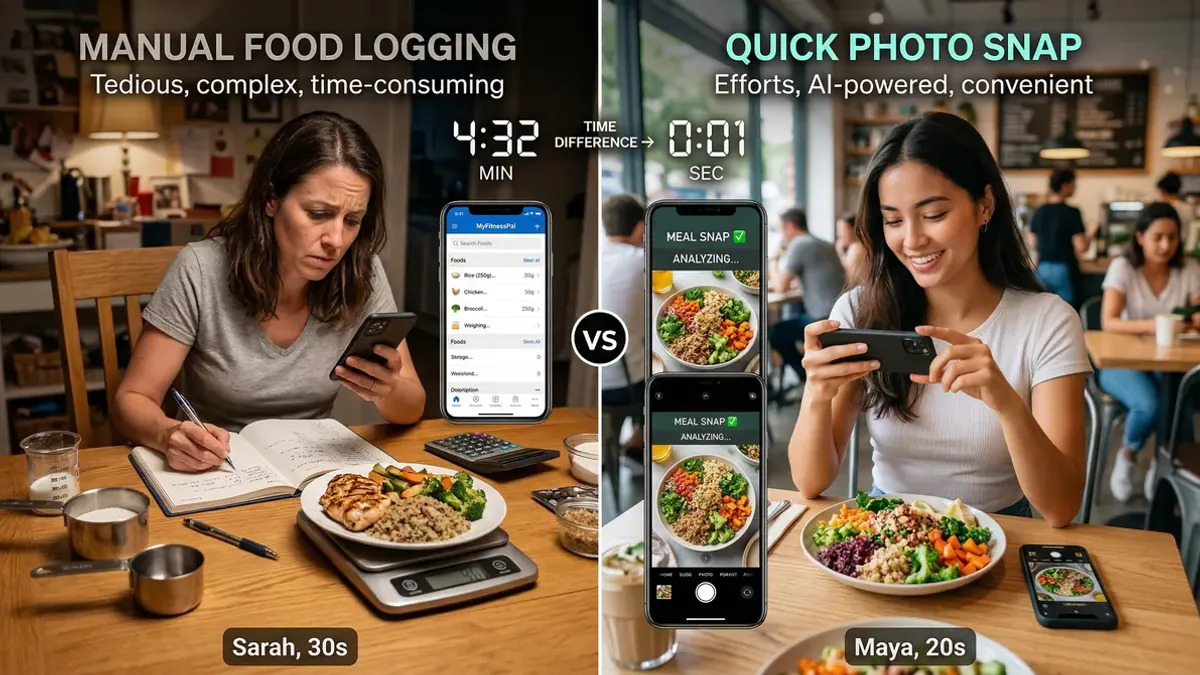
Speed. Taking a photo takes seconds, while manual searching and logging can take minutes.
Accuracy. AI doesn't make calculation errors and doesn't forget ingredients. The system analyzes everything it sees.
Ease of use. No hassle with searching through long lists or estimating grams. The camera does the work.
Consistency. AI applies the same criteria to every recognition, without human variation.
Learning effect. By taking photos, you become more aware of what you eat and in what quantities.
What challenges does AI calorie tracking still face?
Despite all the progress, the technology still has limitations that are important to understand.
Complex dishes. A homemade curry with ten ingredients remains difficult to analyze completely accurately.
Hidden ingredients. Oil, butter, or sauces are often not visible but contain many calories.
Lighting conditions. Poor lighting or shadows can make recognition more difficult.
Portion size variation. Large differences in portion sizes between individuals remain a challenge.
Mixed foods. Dishes where ingredients are thoroughly mixed or blended can be harder to separate and analyze.
The future of smart nutrition tracking
AI calorie tracking is changing how we monitor our nutrition. The technology is becoming increasingly smart and accurate, especially as it adapts to different cuisines and eating habits.
Ready to experience how easy calorie tracking can be? Try an AI-powered app and see for yourself how the technology helps you make more conscious food choices without the tedious manual work.