Tracking calories often feels like a chore. Searching databases, weighing portions, estimating how much you actually ate from that plate of pasta. Many people give up because it simply takes too much time.
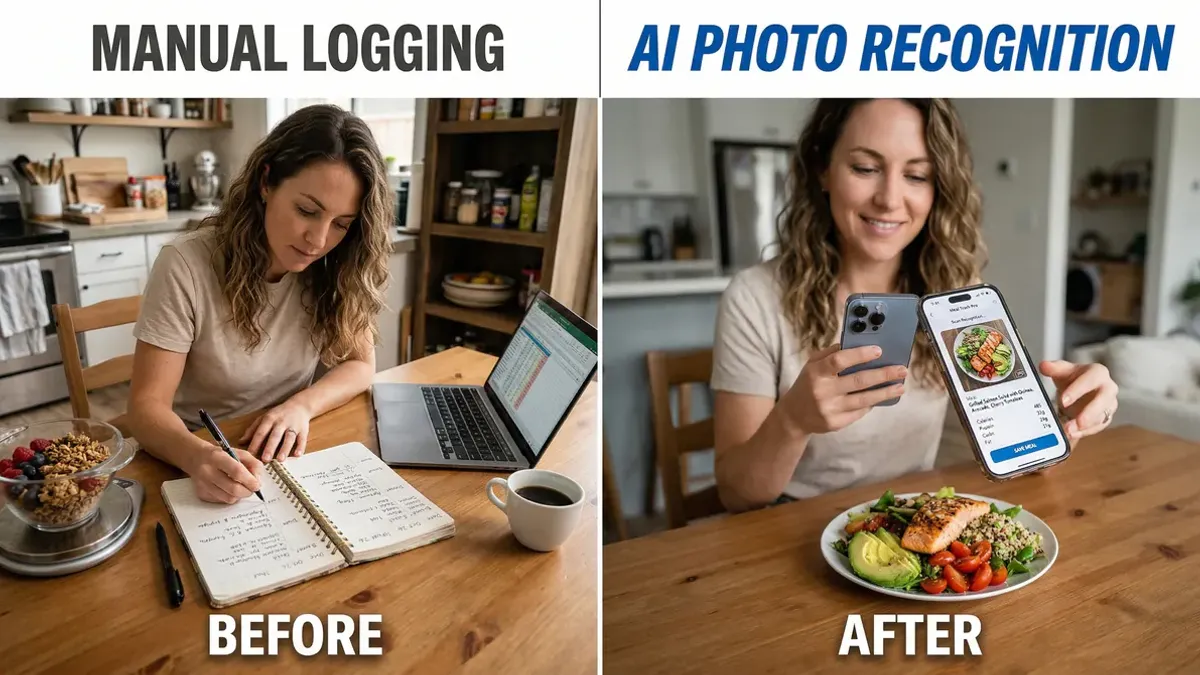
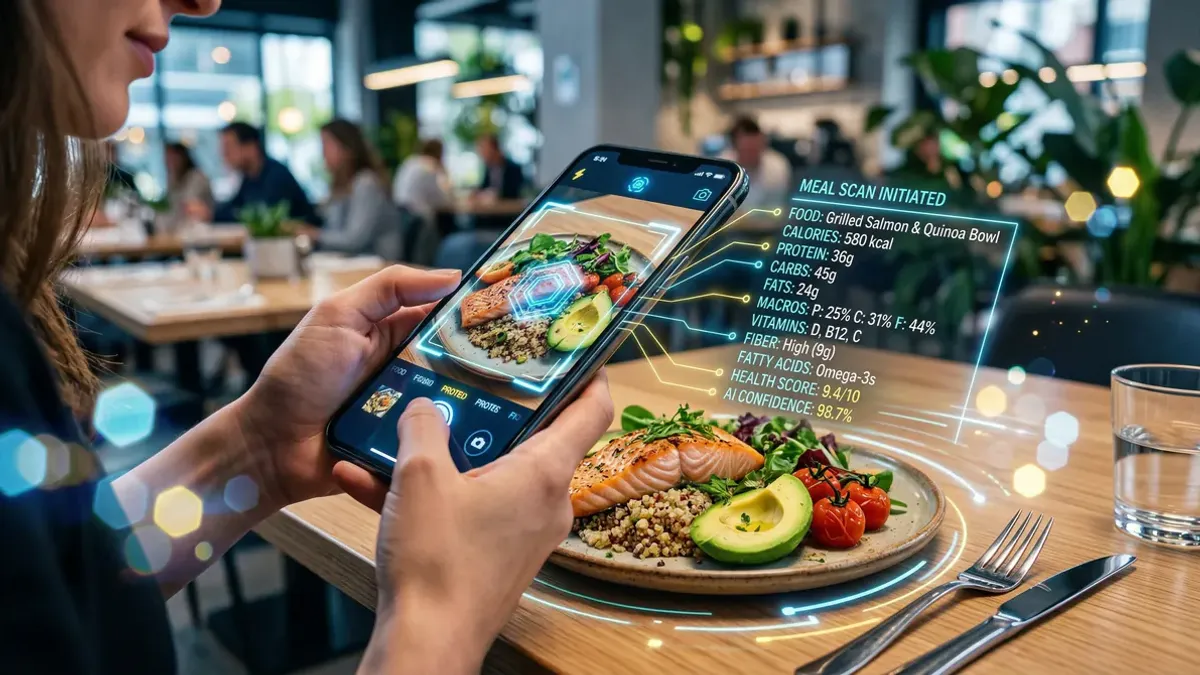
An AI calorie tracker solves this problem by automatically recognizing food through photos. You snap a picture of your plate and the app calculates the nutritional values. No hassle with searching or weighing.
Key takeaways
• AI calorie trackers recognize food through computer vision and automatically calculate calories and nutritional values • Advanced apps use comprehensive food databases with thousands of local products and dishes • Photo recognition achieves 85-90% accuracy and saves about 3-5 minutes per meal • Deep learning improves recognition by analyzing millions of food photos • AI trackers automatically adjust portion sizes based on visual reference points • The technology works best with clear photos under good lighting conditions
How does AI food recognition work?
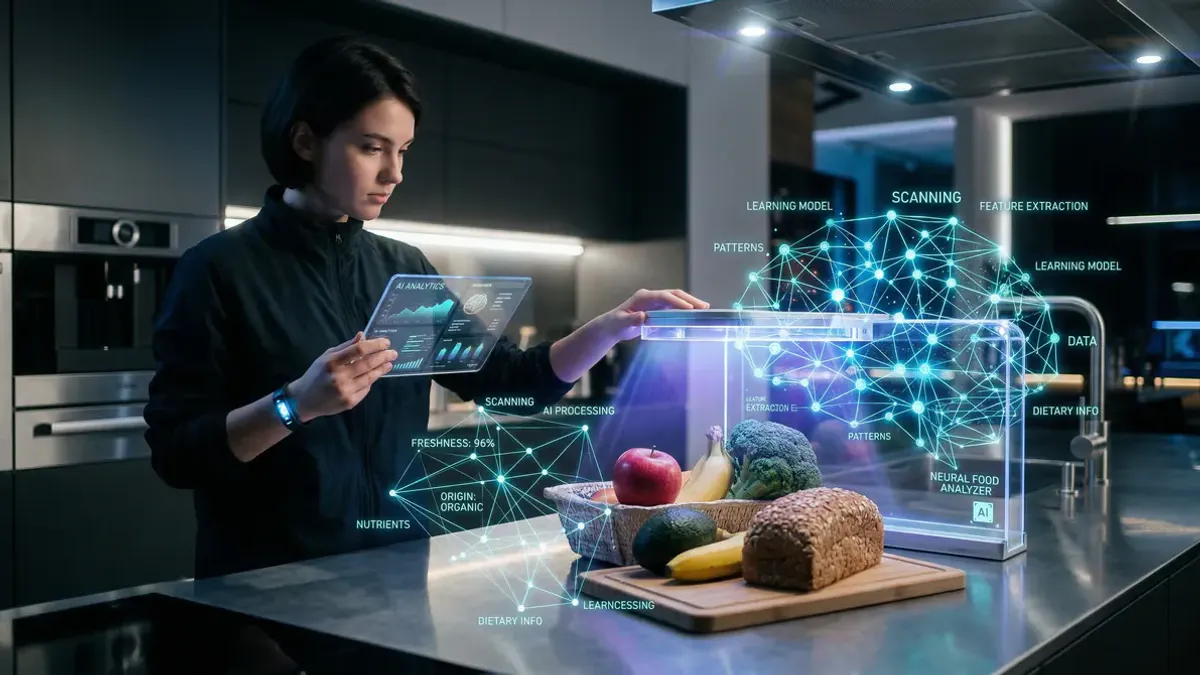
An AI calorie tracker uses computer vision to identify food items. The app analyzes colors, shapes, and textures in your photo and compares them against a database of millions of food images.
Deep learning technology. The system learns from every photo users take. More data means more accurate recognition. Advanced AI calorie tracker systems can now recognize over 85,000 food items, from fresh vegetables to complex prepared dishes.
Portion size estimation. The AI uses visual reference points like plates, utensils, and hands to estimate portion sizes. An algorithm then calculates nutritional values based on the estimated quantity.
Local food databases. For accurate results, an AI calorie tracker needs access to local food data. Regional products and dishes often don't exist in international databases, making local expertise crucial.
Why is AI more accurate than manual entry?
People make systematic errors when estimating portion sizes. Research shows we typically underestimate calories by 20-40% on average.
Objective measurement. AI uses consistent criteria to assess food. No subjective estimates of "a handful of nuts" or "a generous spoonful of peanut butter."
Visual references. The technology compares your portion against thousands of other photos of the same dish. This provides a more reliable estimate than your own intuition.
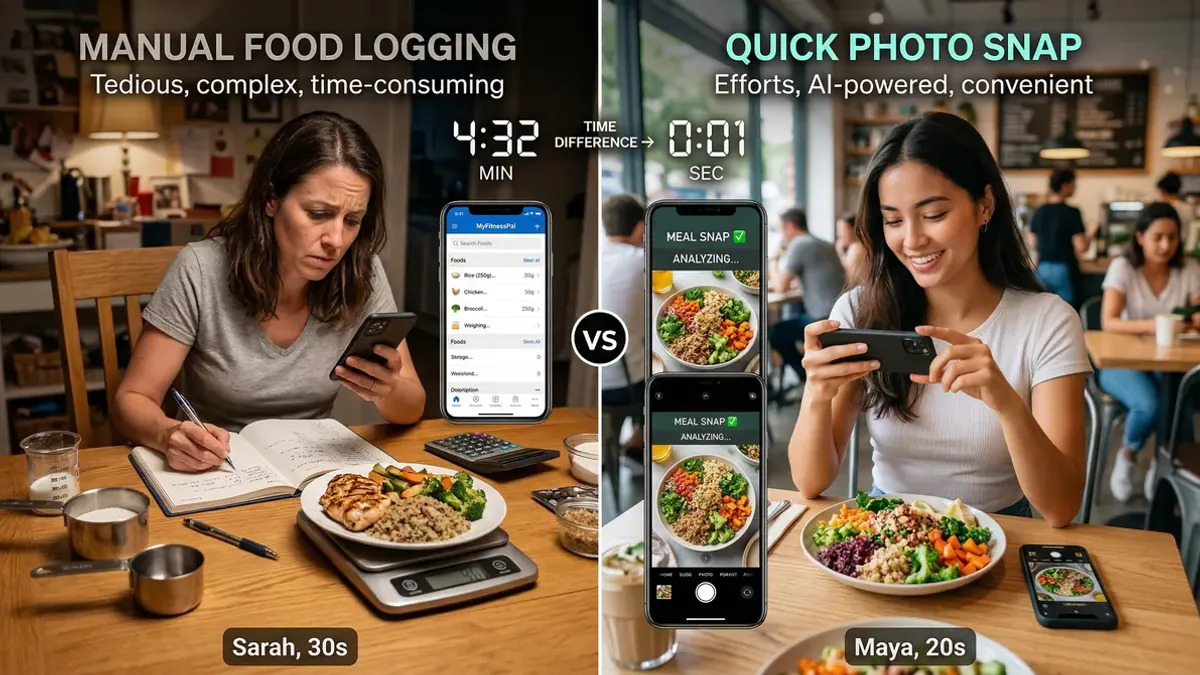
Less forgetfulness. Taking a photo takes 5 seconds. Manual searching and entry costs 3-5 minutes per meal. The lower barrier means you're less likely to forget tracking your food.
What are the limitations of AI food recognition?
AI calorie trackers are smart, but not perfect. Certain situations remain challenging for the technology.
Mixed dishes. A casserole with multiple ingredients is harder to analyze than individual components. The AI must estimate proportions of meat, vegetables, and starches.
Hidden ingredients. Oil, butter, and sauces are often invisible in photos but contain significant calories. Some apps ask follow-up questions about preparation methods.
Lighting conditions. Poor lighting or shadows can disrupt recognition. Photos taken in natural daylight give the best results.
Complex preparations. Dishes with multiple cooking methods or layered ingredients challenge even advanced AI systems.
How to choose the best AI calorie tracker?
Not all AI calorie trackers are created equal. Consider these factors when making your choice:
1. Comprehensive food database. Check if the app recognizes foods common in your diet. Test with typical dishes from your cuisine.
2. Accuracy rates. Quality apps achieve 85-90% recognition accuracy. Ask for examples or try a free version first.
3. User experience. The app should work quickly and intuitively. If taking photos feels cumbersome, you won't stick with it.
4. Privacy protection. Check where your food photos are stored and whether they're shared with third parties.
5. Offline functionality. Some apps only work with internet connection. Consider this if you're often on the go.
Tips for better AI recognition
You can improve your AI calorie tracker's accuracy with these strategies:
Good lighting. Take photos in daylight or under bright lamps. Avoid shadows across your plate.
Clear angles. Photograph from above for best recognition. Side angles make portion size estimation more difficult.
Reference points. Include utensils, plates, or your hand for scale reference. This helps the AI determine portion sizes.
Separate ingredients. Photograph components separately for complex homemade meals. This gives more accurate results.
Consistency. Use similar plates and angles for comparable meals. The AI learns from your patterns.
Start smarter calorie tracking today
An AI calorie tracker makes healthy eating easier by removing the biggest frustration: time-consuming food logging. With photo recognition, calorie counting becomes as natural as taking an Instagram photo of your meal.
The technology keeps improving. What's 85% accurate today will likely be 95% accurate next year. For people who want to track their nutrition without hassle, an AI calorie tracker is the logical next step.
Our complete guide to calorie counting covers everything you need to know about building sustainable tracking habits.