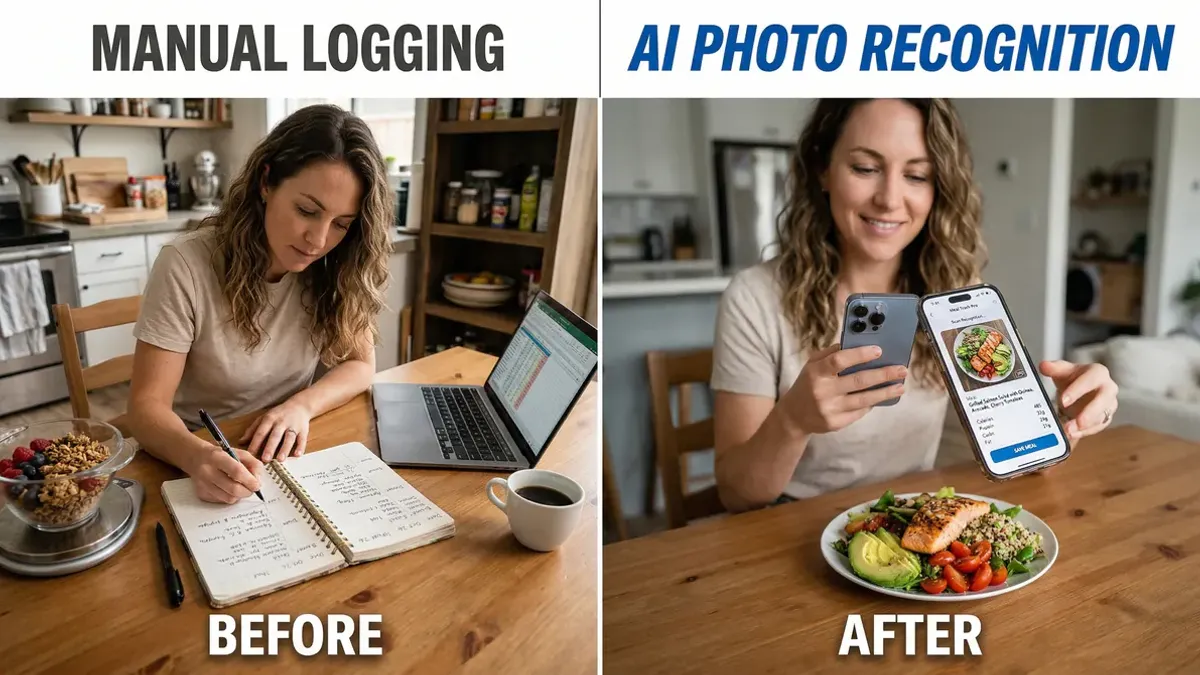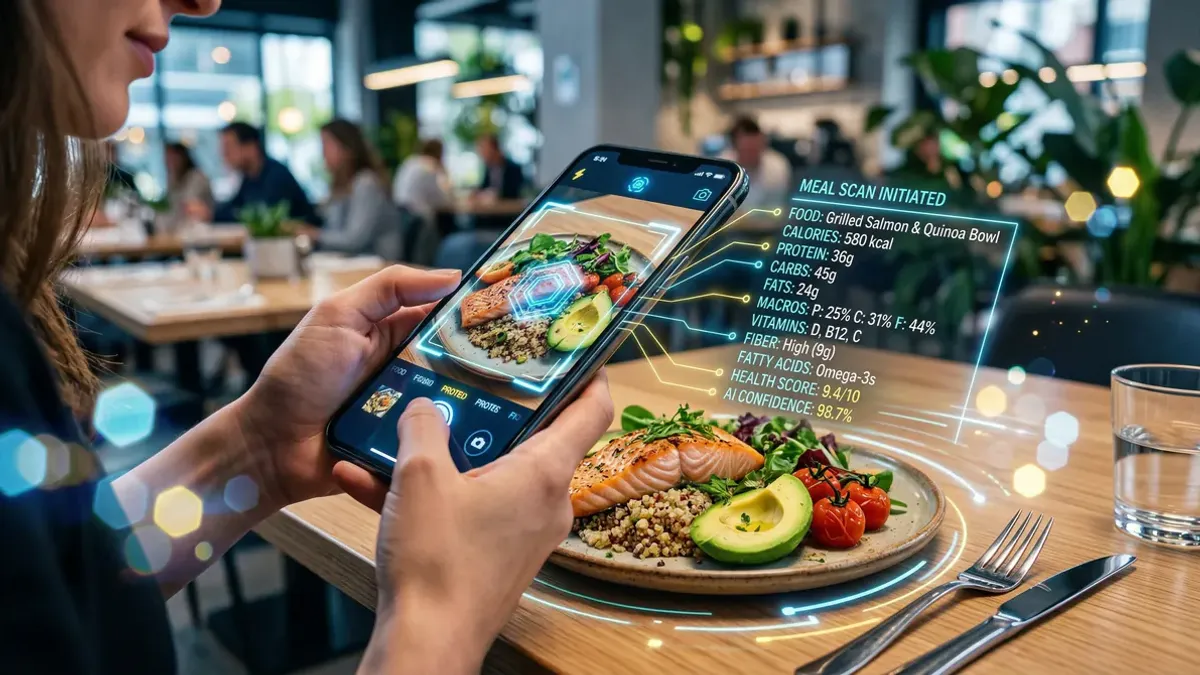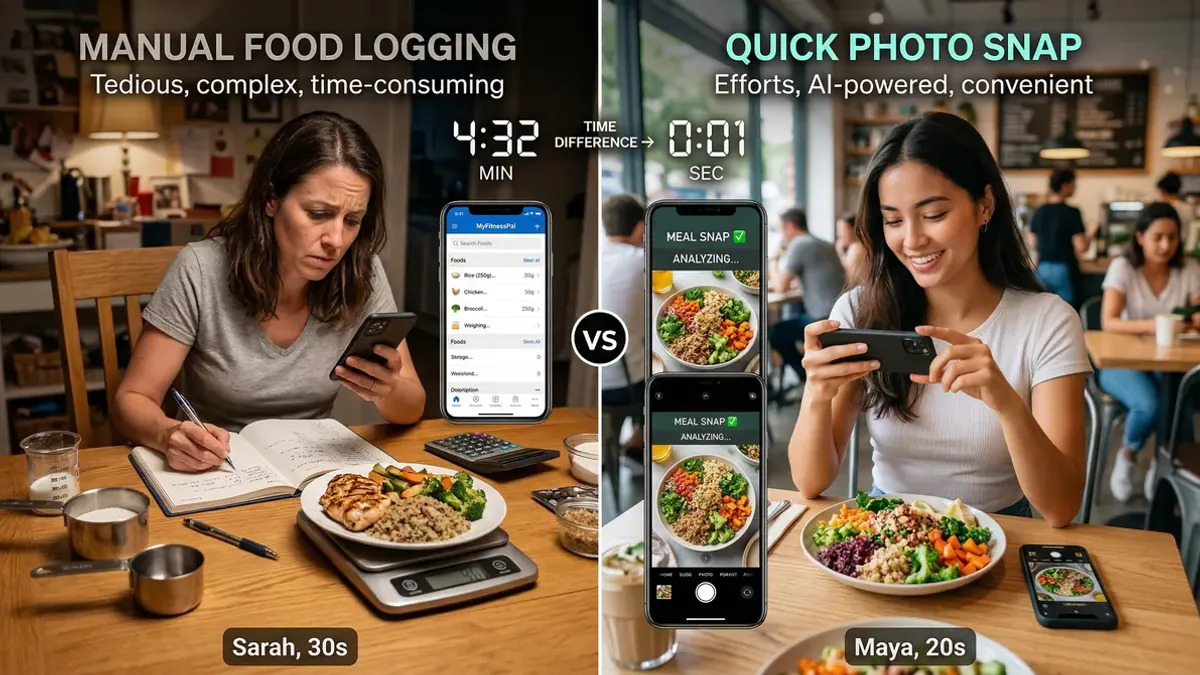
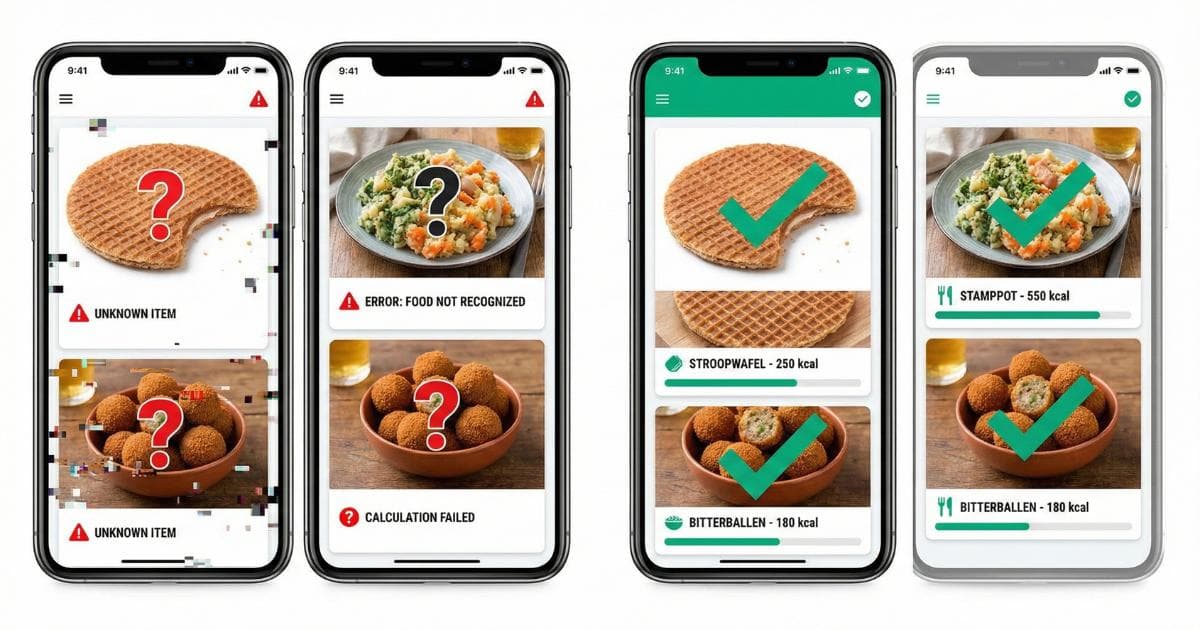
You photograph your lunch with a calorie tracking app. The AI analyses the image. The result: "Fried meat roll -- 280 calories." You were eating a kroket. The AI has never seen one before.
This scenario plays out thousands of times a day for Dutch people using American AI calorie tracking apps. The AI was trained on burgers, tacos, and mac and cheese. It has no idea what boerenkoolstamppot looks like. It cannot distinguish a bitterbal from a hush puppy. It thinks hagelslag is "chocolate cake topping."
This is not a minor inconvenience. It is a fundamental problem that makes AI calorie tracking unreliable for millions of Dutch people.
Why do American AI calorie trackers fail in the Netherlands?
The problem is not that AI calorie tracking does not work. It works well -- for American food. The problem is that Dutch food culture is genuinely different, and AI models trained on American datasets cannot bridge that gap.
1. The training data problem
AI food recognition works by learning from hundreds of thousands of labelled food images. The model sees 50,000 photos of hamburgers, learns what a hamburger looks like, and can then identify new hamburger photos it has never seen.
The issue: the vast majority of food image datasets are American or Western-generic. A 2023 systematic review found that AI dietary assessment tools trained on Western food databases overestimate energy intake for non-Western diets, because the training data does not represent local food preparation methods and ingredients [1]. CalAI, a leading AI calorie tracker, was built in San Francisco and trained primarily on American food. Its model has seen thousands of images of pancakes (the fluffy American kind), but likely zero images of pannenkoeken (the thin Dutch kind). It can identify a burrito within seconds but has never encountered a broodje kroket.
This is not a limitation that can be fixed with a simple database update. The AI model itself needs to be trained on Dutch food to recognise it accurately. Research on Central Asian cuisine has already demonstrated that creating region-specific food image datasets dramatically improves recognition accuracy for local dishes [2].
2. The database problem
Even if the AI correctly identifies what you are eating, it needs to look up the nutritional values in a database. And this is where the second problem emerges.
American calorie trackers use American databases. The USDA FoodData Central database contains nutritional data for American food products. A "cheese sandwich" in the USDA database uses American cheese, American bread, and American portion sizes. These are different from a Dutch boterham met kaas.
Some concrete differences:
| Food item | USDA estimate | NEVO value | Difference |
|---|---|---|---|
| Cheese sandwich (1 slice bread + cheese) | ~310 kcal | 227 kcal | +37% |
| Pancake (1 serving) | ~227 kcal | 180 kcal | +26% |
| Chocolate sprinkles on bread (hagelslag) | Not listed | 280 kcal | N/A |
| Mashed potato dish (stamppot) | Not listed | 394 to 669 kcal | N/A |
The USDA does not even have entries for many Dutch foods. Stamppot, hagelslag, kroket, bitterballen, frikandel, vla, ontbijtkoek -- none of these exist in the American database.
3. The portion size problem
Dutch and American portion sizes are fundamentally different. A standard American restaurant serving can be two to three times larger than a Dutch portion. When an AI estimates calories based on American portion assumptions, it consistently overestimates for Dutch meals.
A Dutch lunch typically consists of two slices of bread with cheese -- roughly 450 calories. An American "lunch" in the AI's training data might be a foot-long sub sandwich at 800 to 1,200 calories. The AI's portion estimation is calibrated for the wrong country.
What makes Dutch food culture unique?
The Netherlands has one of the most distinctive food cultures in Western Europe. Understanding why Dutch food is different helps explain why it needs its own calorie tracking solution.
1. The bread-based meal system
The Dutch are among the few nations that eat cold bread meals for both breakfast and lunch. The average Dutch person eats four to five slices of bread per day, topped with a variety of beleg (toppings) that are uniquely Dutch.
These toppings -- hagelslag (chocolate sprinkles), vlokken (chocolate flakes), pindakaas (peanut butter in a distinctly Dutch formulation), filet americain (raw beef spread), leverworst -- are not in any American database.
2. The stamppot tradition
Stamppot (mashed potato mixed with vegetables) is the national winter dish. There are dozens of varieties: boerenkoolstamppot, hutspot, andijviestamppot, zuurkoolstamppot. Each has different caloric values depending on the vegetable, the amount of butter, and the type of meat served alongside it.
No American AI has been trained to recognise these dishes, let alone distinguish between boerenkool and andijvie in a mashed potato mixture.
3. The snack culture
The Dutch snackbar is a cultural institution. Frikandellen, kroketten, bitterballen, kaassouffles, bamischijven -- these deep-fried snacks are uniquely Dutch. An American AI might recognise "fried food" but cannot tell the difference between a kroket and a croqueta, which have very different nutritional profiles. A kroket contains 190 kcal per piece, while a Spanish croqueta can range from 60 to 120 kcal depending on size and filling [3].
4. The NEVO database
The Netherlands has something most countries do not: a scientifically verified national food composition database. The NEVO database, maintained by the RIVM (National Institute for Public Health and the Environment), contains detailed nutritional data for 2,389 Dutch food products, with 136 nutrients measured per item [4].
This data is based on chemical analysis, not user submissions. It is the gold standard for Dutch nutritional data, used by dietitians, researchers, and the Voedingscentrum (Dutch Nutrition Centre).
What does the current calorie tracking landscape look like?
The current calorie tracking landscape for Dutch users looks like this:
Apps with AI recognition but no Dutch data.
- CalAI. Excellent AI, but trained on American food, no Dutch database.
- Other AI-first apps. Same limitation.
Apps with Dutch data but no AI.
- Mijn Eetmeter. Uses NEVO data, but manual entry only, outdated interface.
- Voedingscentrum caloriechecker. Web-only, no app functionality.
Apps with neither Dutch AI nor Dutch data.
- MyFitnessPal. Crowd-sourced data (often unreliable), no AI, declining Dutch user base.
- YAZIO. German-focused, partial Dutch data, limited AI.
No existing app combines AI food recognition with a comprehensive Dutch food database. That is the gap.
What would a Dutch-specific AI calorie tracker need?
A calorie tracker built for the Dutch market would need several things that current apps lack.
1. AI trained on Dutch food
The model needs to recognise pannenkoeken, not pancakes. It needs to distinguish between boerenkoolstamppot and hutspot. It needs to know that the brown cylinder on a bread roll is a kroket, not a spring roll.
This requires training data that includes thousands of images of Dutch meals, photographed in Dutch homes, restaurants, and kantines.
2. The NEVO database as foundation
The nutritional data should come from the NEVO database -- scientifically verified, not crowd-sourced. This ensures that when the AI identifies a kroket, the calorie count (190 kcal) is based on chemical analysis and consistent across every use [3].
3. Dutch supermarket products
Beyond NEVO's 2,389 generic products, the app needs to know specific Dutch supermarket products. The Albert Heijn huismerk yoghurt, the Jumbo granola, the Lidl protein bar. This requires integration with Dutch product databases.
4. Dutch language interface
This seems obvious, but most calorie trackers are English-first with a Dutch translation bolted on. The search function, product names, and AI descriptions should be natively Dutch.
5. EU data storage
Health data is sensitive data under GDPR. Dutch users rightly expect their food diary to be stored within the EU, under European data protection law. Most American apps store data on US servers under US jurisdiction [5].
How big is the opportunity?
Half of Dutch adults are overweight, according to the CBS Leefstijlmonitor 2024 -- that is over 7 million people [6]. Meanwhile, research shows that most people who start food tracking quit within weeks, primarily because the tools are too cumbersome. A multidisciplinary obesity program study found a 21 percent dropout rate at just two months, rising to 68.5 percent at one year [7].
If a calorie tracker could reduce the friction enough to keep Dutch users engaged, the health impact would be significant. And the only way to reduce friction for Dutch users is to build something specifically for the Dutch market -- with AI that actually recognises their food and a database that accurately reflects what they eat.
Frequently asked questions
Can I use CalAI in the Netherlands?
You can, but the results will be unreliable for Dutch food. CalAI's AI is trained on American food, and its database does not contain Dutch products. It works well for international dishes (pizza, sushi, burgers) but fails for stamppot, kroketten, and broodjes.
What is the best calorie tracker for expats in the Netherlands?
If you eat a mix of international and Dutch food, no single app currently serves you well. MyFitnessPal has the broadest database but with unreliable Dutch data. Mijn Eetmeter has accurate Dutch data but a limited selection and outdated interface. Moveno aims to bridge this gap when it launches.
Is the NEVO database available in English?
The NEVO database interface (nevo-online.rivm.nl) is available in English. Product names are in Dutch, but the nutritional data itself is language-neutral -- numbers are numbers.
How accurate is AI calorie tracking?
When the AI correctly identifies the food and the database has accurate data, AI calorie tracking can be within 10 to 15 percent of actual values for simple, clearly plated dishes [1]. The key variables are food recognition accuracy and database quality. For mixed dishes or uncommon foods, accuracy decreases. This is precisely why a locally trained AI with a local database matters.
What is the NEVO database?
The NEVO database (Nederlands Voedingsstoffenbestand) is the Dutch national food composition database, maintained by the RIVM. It contains data on 2,389 food products with 136 nutrients measured per item. Unlike crowd-sourced databases such as MyFitnessPal, NEVO values are based on chemical analysis and used by dietitians, researchers, and the Dutch government [4].
A calorie tracker built for the Dutch market
The Netherlands deserves a calorie tracker that understands Dutch food. Not an American app with a Dutch translation, but something built from the ground up for how Dutch people eat. Read our nutrition app guide to learn what to look for when choosing a tracking app.
At Moveno, we are building exactly that. AI food recognition trained on Dutch meals, powered by the NEVO database and thousands of Dutch supermarket products. All verified. All Dutch.
Curious? Join the waitlist and be the first to try it.
Sources
- Amoutzopoulos B, Steer T, Roberts C et al. (2023). AI-based digital image dietary assessment methods compared to humans and ground truth: a systematic review. Nutr Rev, 82(8), 1100-1118. PubMed
- Rukmangadachar LA, Kulbekov A et al. (2023). A Central Asian Food Dataset for Personalized Dietary Interventions. Nutrients, 15(7), 1728. PubMed
- Voedingscentrum. Caloriechecker. voedingscentrum.nl/caloriechecker
- RIVM. Dutch Food Composition Database (NEVO). rivm.nl/en/dutch-food-composition-database
- European Commission. Data protection in the EU. ec.europa.eu/info/law/law-topic/data-protection
- CBS (2025). Roken en alcoholgebruik afgenomen sinds 2014, overgewicht gelijk gebleven. Leefstijlmonitor 2024. cbs.nl
- Budillon A, Belfiore A et al. (2022). Two, Six, and Twelve-Month Dropout Rate and Predictor Factors After a Multidisciplinary Residential Program for Obesity Treatment. Int J Environ Res Public Health, 19(12), 7359. PubMed