Calorie tracking. Everyone who has tried it knows the story. You start with the best intentions, logging every meal. You look up ingredients, estimate portion sizes, and enter everything manually. After a few days, the motivation starts to fade. After two weeks, you've stopped.
You're not alone. Research shows that roughly one in three people who download a calorie-tracking app stop using it within a few weeks. Not because they've reached their goals, but because the process takes too much effort.
But what if your smartphone could do the work for you? What if you simply took a photo of your plate and knew what you were eating within seconds? That's exactly what AI calorie tracking makes possible. In this article, we explain how it works, why it's more accurate than manual logging, and what to look for when choosing an AI calorie tracker.
Why do so many people quit calorie tracking?
Before we dive into the technology, it's useful to understand why traditional calorie tracking fails so often. The problems aren't new:
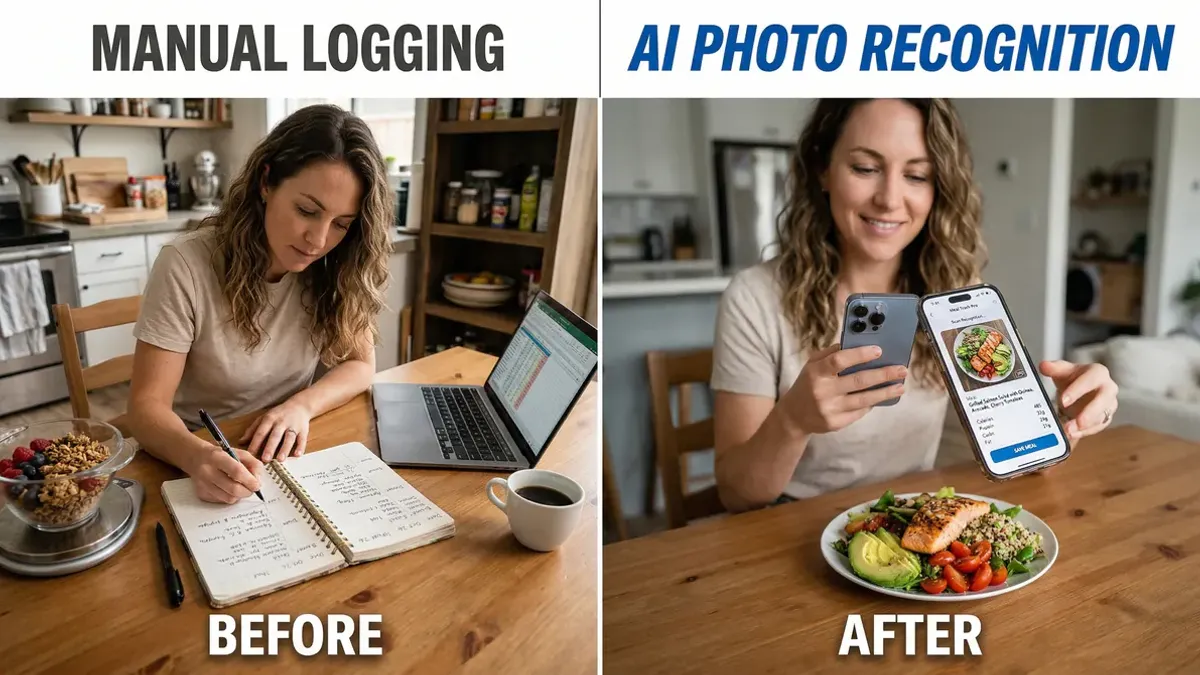
- Time. Manually logging each meal takes 5 to 10 minutes on average. Three meals plus snacks? That's easily half an hour per day.
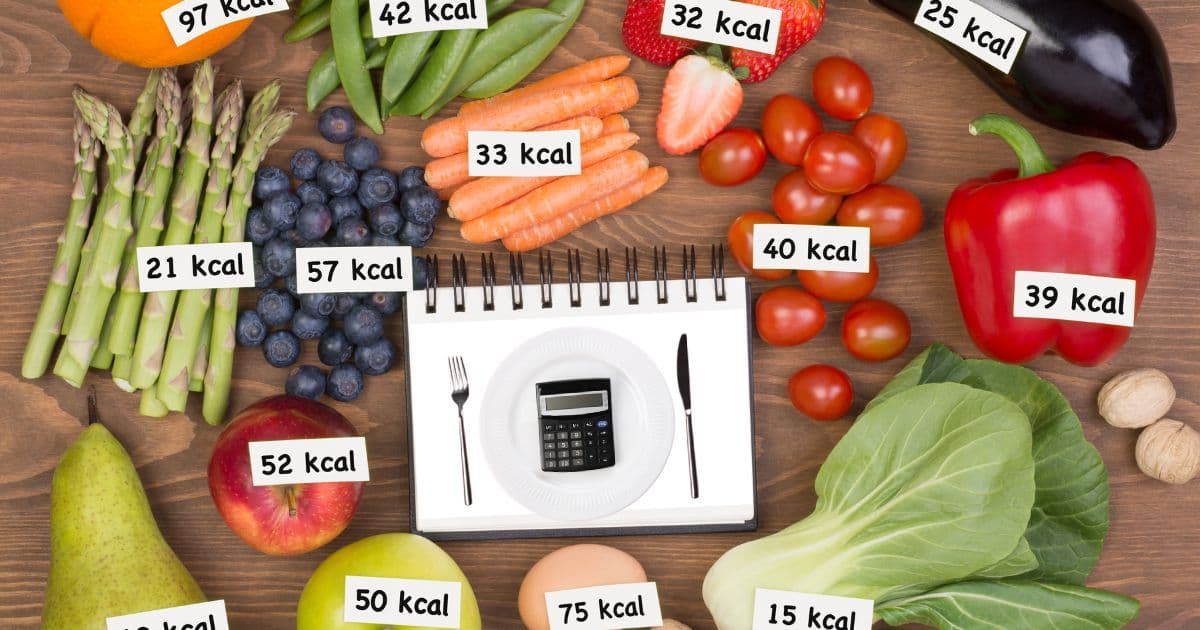
- Inaccuracy. Humans are notoriously bad at estimating portion sizes. Studies show that manual tracking can deviate by as much as 400 calories per day from actual intake.
- Forgotten extras. That dollop of mayonnaise, the splash of olive oil, the extra cheese — it's the small additions you forget, but together they can add up to hundreds of calories.
- Motivation loss. It feels like homework. And once you skip a meal, it feels pointless to continue.
The problem isn't that people aren't motivated. The problem is that the process has too much friction. AI food recognition removes that friction.
How does an AI calorie tracker work?
An AI calorie tracker replaces the manual search-and-enter process with three steps that happen in seconds.
Step 1: Food recognition with deep learning
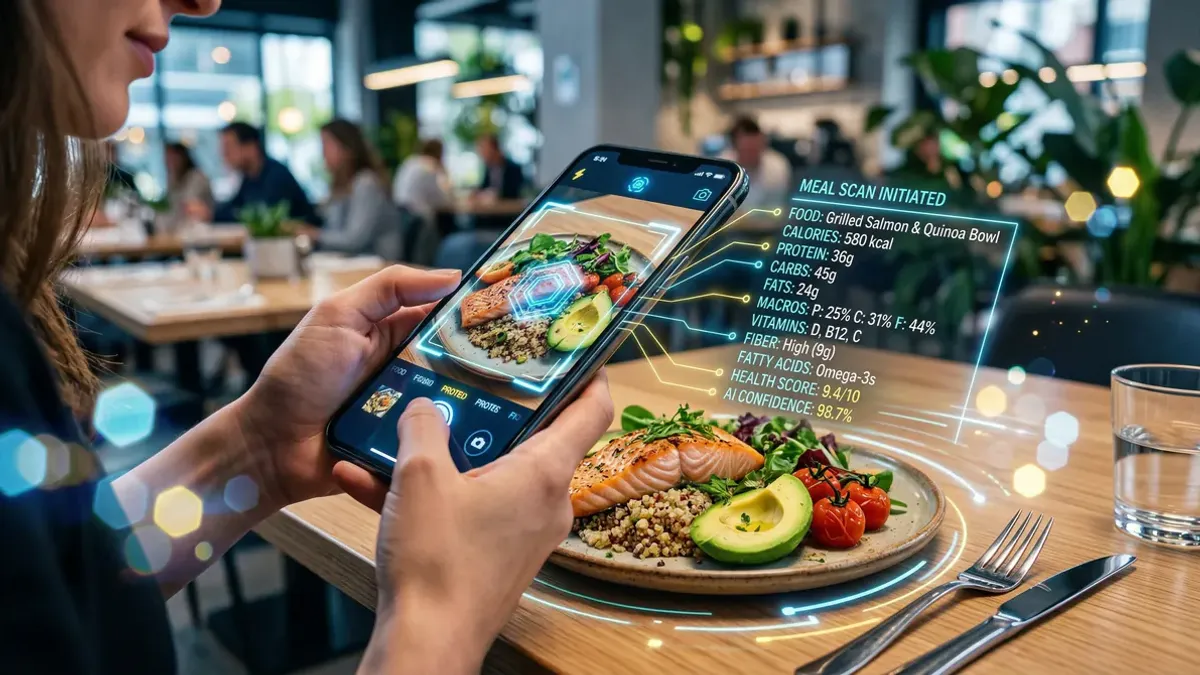
When you take a photo of your meal, a deep learning model analyzes what's on your plate. This model has been trained on millions of food photos and has learned to recognize visual patterns — from the shape and color of a tomato to the difference between rice and couscous.
The technology behind this is called computer vision, a branch of artificial intelligence that teaches computers to "understand" images. The model doesn't just recognize what type of food it is — it also identifies individual ingredients in composite dishes.
Step 2: Estimating portion size
After recognizing the food, the system estimates the portion size. It does this by analyzing the proportions in the photo — the size of the plate, the amount of food relative to the tableware, and the depth of the portion. Modern models are reaching an accuracy that gets closer and closer to that of a professional dietitian.
Step 3: Linking to a nutrition database
Recognition alone isn't enough. To tell you how many calories, proteins, carbohydrates, and fats you're eating, the system needs to link the recognized foods to a nutrition database with validated nutritional values.
And this is where there's an important difference between AI calorie trackers. The quality of the underlying database determines how accurate your results are. A generic international database doesn't know that stamppot boerenkool met rookworst is a typical Dutch dish with specific nutritional values. An app that works with a validated Dutch food database — with thousands of verified food items from Dutch cuisine — simply gives you better results.
At Moveno, we combine AI photo recognition with a comprehensive Dutch nutrition database of over 2,300 verified food items. That means the system doesn't just recognize your food — it also knows the exact nutritional values of products you buy at the supermarket every day.
How accurate is AI calorie tracking?
This is the question everyone asks — and rightly so. Recent studies on deep learning-based food recognition show that modern AI models achieve an accuracy of 93 to 96 percent when identifying food items.
But accuracy is about more than just recognition. It's also about consistency.
When you track calories manually, your accuracy varies from day to day. Tired? You're more likely to estimate poorly. In a rush? You skip logging altogether. An AI system doesn't have those human factors. It applies the same method every time.
That said, AI food recognition isn't perfect. There are situations where it's more challenging:
- Composite dishes. A nasi goreng with ten ingredients is harder to analyze than a piece of fruit.
- Portion estimation with deep bowls. When food is stacked, the estimate can deviate.
- Unfamiliar dishes. The less the model has been trained on a specific dish, the less accurate it is.
That's why the quality of training data matters so much. An AI calorie tracker trained on Dutch dishes performs better on stamppot and bitterballen than a model trained primarily on American fast food.
AI vs. manual calorie tracking: the key differences
How does AI tracking compare to the traditional approach? Here are the key differences:
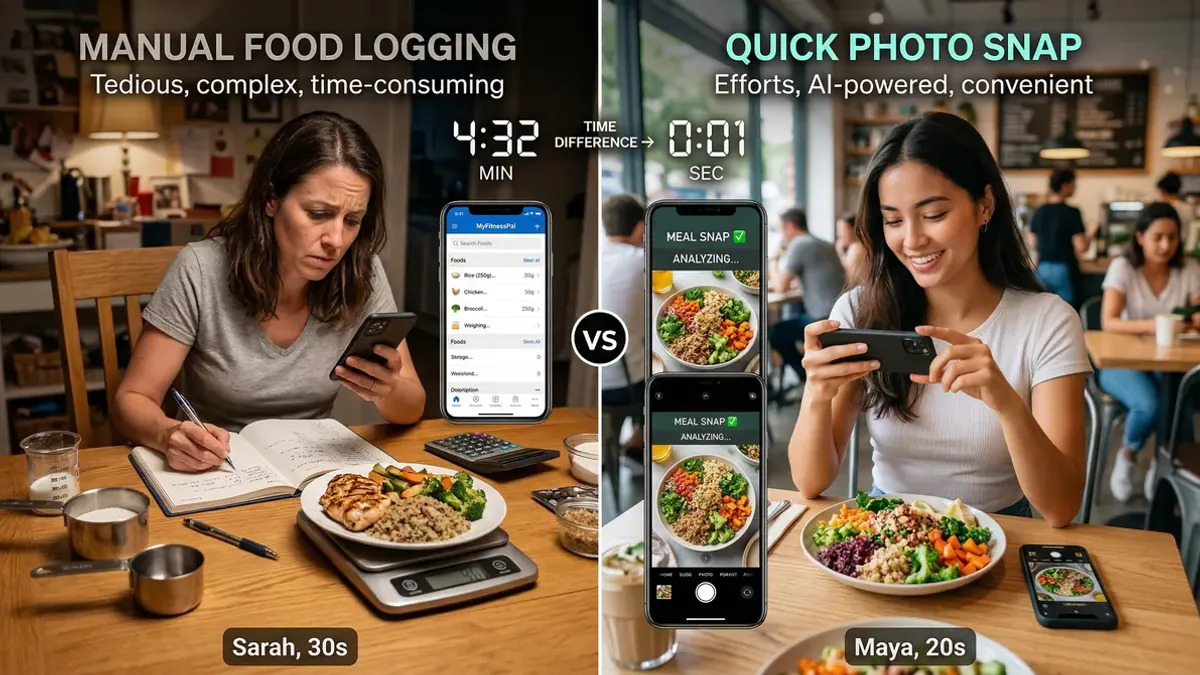
Speed. Manual entry takes 5 to 10 minutes per meal. Taking a photo and having it analyzed takes seconds.
Accuracy. Manual tracking can deviate by up to 400 calories per day. AI systems are consistent and don't leave out ingredients.
Consistency. With manual tracking, your accuracy depends on your motivation and energy levels. AI delivers the same quality level every time.
Adherence. The less effort something takes, the longer you stick with it. Users of AI-powered tracking maintain their habits on average three times longer than people who log manually.
Forgotten items. That splash of oil, that spoonful of peanut butter — with manual tracking you forget them. AI sees what's on your plate.
The conclusion is clear: AI tracking lowers the barrier to monitoring your nutrition, which means you stick with it longer and get more accurate data.
What to look for when choosing an AI calorie tracker
Not every AI calorie tracker is created equal. Here are a few things to watch for:
1. The nutrition database
This is the most important component. An app can be great at recognizing food — but if the underlying database doesn't contain local products, you'll get inaccurate results. Pay specific attention to whether the app works with a validated database that contains the food items you actually eat, not just international products.
2. Local food recognition
Many AI models are trained on American and Asian cuisines. If you live in the Netherlands, you want an app that recognizes stamppot, boerenkool met rookworst, hagelslag, and stroopwafels — dishes that generic models often misidentify or don't recognize at all.
3. Language
Sounds obvious, but many calorie-tracking apps are only available in English with a US-centric food library. If Dutch is your first language, searching for products in English adds friction and increases the chance of errors.
4. Privacy and data storage
Your nutrition data is personal information. Check where your data is stored and whether the app complies with GDPR. Apps that store data within the EU offer you legally stronger protection than apps with servers outside Europe.
5. Price
Some AI calorie trackers charge up to 20 euros per week. That's unnecessary. Good AI food recognition doesn't have to be expensive.
Moveno is built with exactly these points in mind: a comprehensive Dutch nutrition database with over 2,300 verified food items, AI trained on Dutch cuisine, fully available in Dutch, data stored in the EU (Frankfurt), and fairly priced.
The future: voice tracking, wearables, and personal coaching
AI food recognition via photos is just the beginning. The technology is developing rapidly and new possibilities keep emerging.
Voice tracking. Imagine saying: "I had two sandwiches with cheese and a glass of milk" and the system automatically calculates the nutritional values. No photo needed, no typing. This is one of the features we're working on at Moveno.
Wearable integration. By combining nutrition data with data from smartwatches and fitness trackers — steps, heart rate, calories burned — you get a complete picture of your health. Not just what you eat, but also how your body responds to it.
Personal nutrition coaching. Based on your eating patterns, AI can detect trends and make personalized recommendations. Consistently eating too little protein? The system lets you know and suggests alternatives.
Recognition of composite dishes. The current generation of AI models is getting increasingly better at analyzing complex meals with multiple ingredients. In a few years, the difference from a professional nutritional analysis will be minimal.
Start tracking smarter today
AI is changing the way we look at nutrition. No more manual entry, no more guesswork, no more losing motivation because of a cumbersome process. Just take a photo and know what you eat.
At Moveno, we're building the first AI calorie tracker designed specifically for the Dutch market — with a validated database of thousands of Dutch food items, AI that can tell stamppot from hutspot, and a price that's fair.
Curious to see how this works in practice? Moveno is launching soon. Join the waitlist to be among the first to get access.