
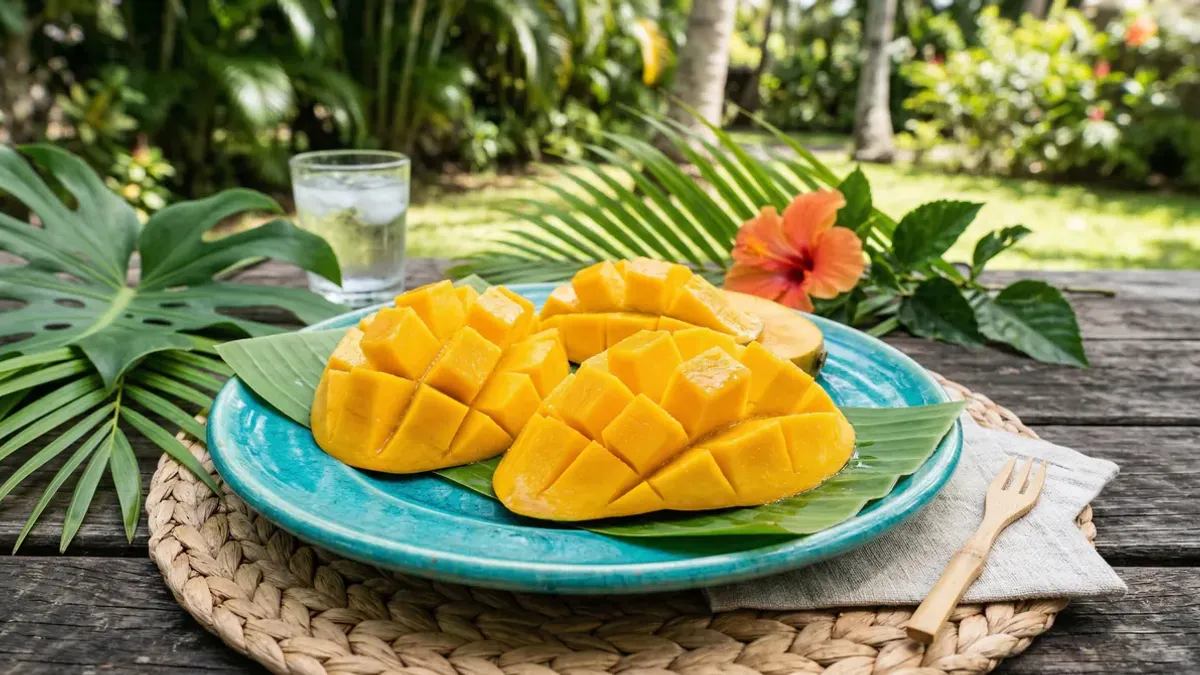
You slice into a ripe mango, and that sweet, tropical aroma fills the kitchen. Mangoes are one of the most popular fruits in the world, enjoyed in smoothies, salads, and straight from the skin. But when you are watching your calorie intake, the sweetness raises an obvious question: how many calories are in a mango, and does it fit into a balanced eating pattern? The answer is more nuanced than a single number. In this article, you will find the full nutritional breakdown of mangoes, how they compare to other fruits, and practical ways to enjoy them while staying on top of your calorie counting goals.
Key takeaways
- A whole mango (280 grams) contains approximately 185 calories. Per 100 grams, that works out to about 66 kcal.
- Mangoes are rich in vitamin C (about 36 mg per 100 grams) and contain beta-carotene, a precursor to vitamin A.
- The majority of calories come from natural sugars -- roughly 14 grams per 100 grams. That is higher than strawberries but comparable to grapes.
- Half a mango as a snack provides about 93 calories, making it easy to fit into most daily calorie budgets.
- Mangoes also supply folate, which plays a key role in cell growth and is particularly important during pregnancy.
- Dried mango contains about 310 calories per 100 grams -- nearly five times more than fresh. Portion awareness matters.
How many calories are in a mango?
A whole mango weighing 280 grams contains approximately 185 calories, based on data from the Dutch Nutrition Centre (Voedingscentrum). Per 100 grams, that works out to about 66 kcal.
Some sources list mango at 60 kcal per 100 grams, while others report up to 65 kcal. The variation comes from differences between mango varieties and ripeness levels. The USDA lists raw mango at 60 kcal per 100 grams, while the Dutch NEVO database puts it at 66 kcal. For this article, we use the NEVO-backed Voedingscentrum data as the primary reference.
| Nutrient | Per 100 grams of mango |
|---|---|
| Calories | 66 kcal |
| Carbohydrates | 14.3 grams |
| Of which sugars | 13.9 grams |
| Fibre | 1.6 grams |
| Protein | 0.6 grams |
| Fat | 0.6 grams |
| Vitamin C | ~36 mg (~40% DV) |
For context, an apple contains about 54 kcal per 100 grams and a banana about 92 kcal. Mango sits comfortably between them. Curious how mango stacks up against other fruits? See our full calories in fruit chart.
Where do mango calories come from?
Nearly all the calories in mango come from carbohydrates, specifically natural sugars. Per 100 grams, mango contains roughly 13.9 grams of sugar, a combination of fructose and sucrose.
Should you be concerned? Not if you are eating whole fruit. The sugars in mango are packaged with fibre, water, and micronutrients that slow digestion and prevent the blood sugar spikes you would get from refined sugar. A mango is not a candy bar.
That said, mango is one of the higher-sugar fruits. A whole mango contains nearly 39 grams of sugar, comparable to a large banana. If you are monitoring sugar intake closely, portion control becomes important.
What vitamins and minerals do mangoes provide?
Mangoes earn their place in a healthy diet through more than just taste. Here are the standout nutrients:
- Vitamin C. About 36 mg per 100 grams, covering roughly 40 percent of your daily value. Vitamin C supports immune function and may improve iron absorption from plant-based foods.
- Beta-carotene. The distinctive orange colour of mango flesh comes from beta-carotene, a provitamin A compound. Beta-carotene functions as an antioxidant and may play a role in immune health.
- Folate. Mangoes contribute to folate intake. Folate is essential for the production of red and white blood cells and is particularly critical during early pregnancy.
- Potassium. This mineral supports normal blood pressure and muscle function.
No single fruit is a miracle food, and mangoes are no exception. But as part of a varied diet, they offer a genuinely useful combination of nutrients.
Can you eat mango while trying to lose weight?
Yes, with some awareness. At 66 kcal per 100 grams, mango is higher in calories than strawberries (29 kcal) or watermelon (36 kcal), but significantly lower than dried fruit or nuts.
Portion size is what matters most. Here is a practical overview:
| Portion | Weight | Calories |
|---|---|---|
| Whole mango | 280 grams | 185 kcal |
| Half a mango | 140 grams | ~93 kcal |
| Mango slice (snack) | 50 grams | ~33 kcal |
| Mango in smoothie | 100 grams | 66 kcal |
Half a mango as an afternoon snack contains roughly the same calories as a medium apple. That fits comfortably into most daily budgets, especially when you are tracking your daily calorie needs.
One thing to keep in mind: mango is moderately filling. With 1.6 grams of fibre per 100 grams, it does not keep you as full as a pear or a portion of berries. Pair it with a protein source -- Greek yoghurt, a handful of almonds, or cottage cheese -- for longer-lasting satiety.
How does mango compare to other tropical fruits?
Mango is far from the only tropical fruit on supermarket shelves. Here is how the most popular options compare:
| Fruit | Calories per 100 grams |
|---|---|
| Papaya | 32 kcal |
| Pineapple | 56 kcal |
| Kiwi | 50 kcal |
| Mango | 66 kcal |
| Lychee | 66 kcal |
| Passion fruit | 97 kcal |
Papaya is the lightest option, while passion fruit is surprisingly calorie-dense. Mango falls in the middle range. But remember: calories are only one part of the picture. Nutrient density, fibre content, and personal enjoyment all matter too.
What are the best ways to eat mango?
Mango is remarkably versatile. Here are five ways to enjoy it while keeping portions in check:
- Fresh and sliced. The classic approach. Cut along the pit, score the flesh in a crosshatch pattern, and scoop it out. Half a mango as a snack comes in at about 93 kcal.
- In a smoothie. Blend 100 grams of mango with plain yoghurt, a handful of spinach, and water. You get a nutrient-dense smoothie for roughly 150 kcal total.
- Over porridge. Add a few mango slices to your morning oats. Natural sweetness without refined sugar.
- In a salad. Mango, lime, red onion, and coriander make a vibrant combination. Add prawns or grilled chicken for a complete meal.
- Frozen as dessert. Dice mango and freeze it for an hour. The result tastes like sorbet without any added sugar.
What about dried mango?
Dried mango is a popular snack, but the calorie difference is dramatic. Fresh mango contains 66 kcal per 100 grams. Dried mango contains about 310 kcal per 100 grams -- nearly five times as much.
The reason is simple: removing water concentrates everything. The sugars, the calories, and the flavour all become more intense. A small handful of dried mango (40 grams) already contains about 124 kcal -- more than half a fresh mango.
If you enjoy dried mango, measure your portions rather than eating straight from the bag. Better yet, mix a few pieces with nuts for a balanced snack that combines quick energy with protein and healthy fats.
Frequently asked questions about mango calories
How many calories are in half a mango? Half a mango (about 140 grams of flesh) contains approximately 93 calories. That is comparable to a medium apple.
Is mango suitable for weight loss? Yes, in appropriate portions. Half a mango as a snack fits well into a balanced eating pattern. Combine it with protein-rich foods for better satiety.
Does mango contain a lot of sugar? Mango has about 14 grams of sugar per 100 grams -- higher than strawberries or oranges, but these are natural sugars consumed alongside fibre and vitamins.
Is dried mango as healthy as fresh? Dried mango retains the same nutrients but in concentrated form. At roughly 310 kcal per 100 grams versus 66 kcal for fresh, it is much easier to overconsume.
Make mango part of your balanced routine
Mango is a delicious, nutrient-rich fruit that deserves a place in a balanced eating pattern. At 66 kcal per 100 grams, it is slightly higher in calories than some fruits, but the combination of vitamin C, beta-carotene, and folate makes it a worthwhile choice.
The key is awareness. Know what you eat, enjoy your portion, and make choices that match your goals. With Moveno, you can snap a photo of your food and instantly see the full nutritional breakdown -- including that perfectly ripe mango you just sliced up.