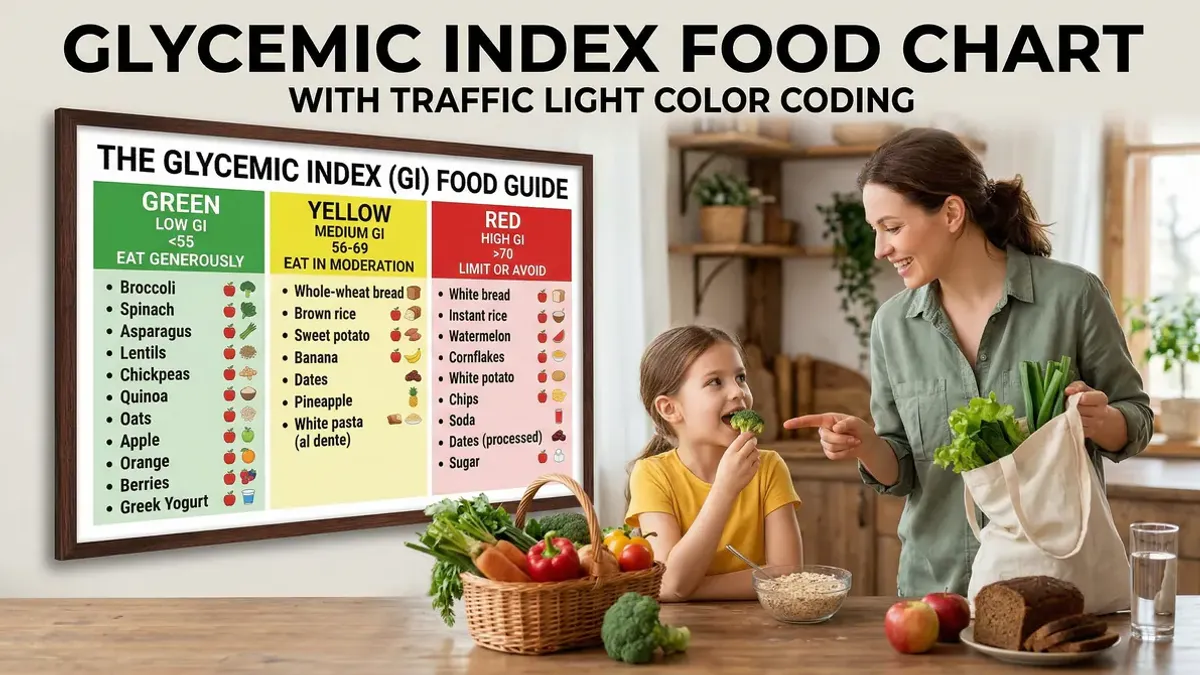
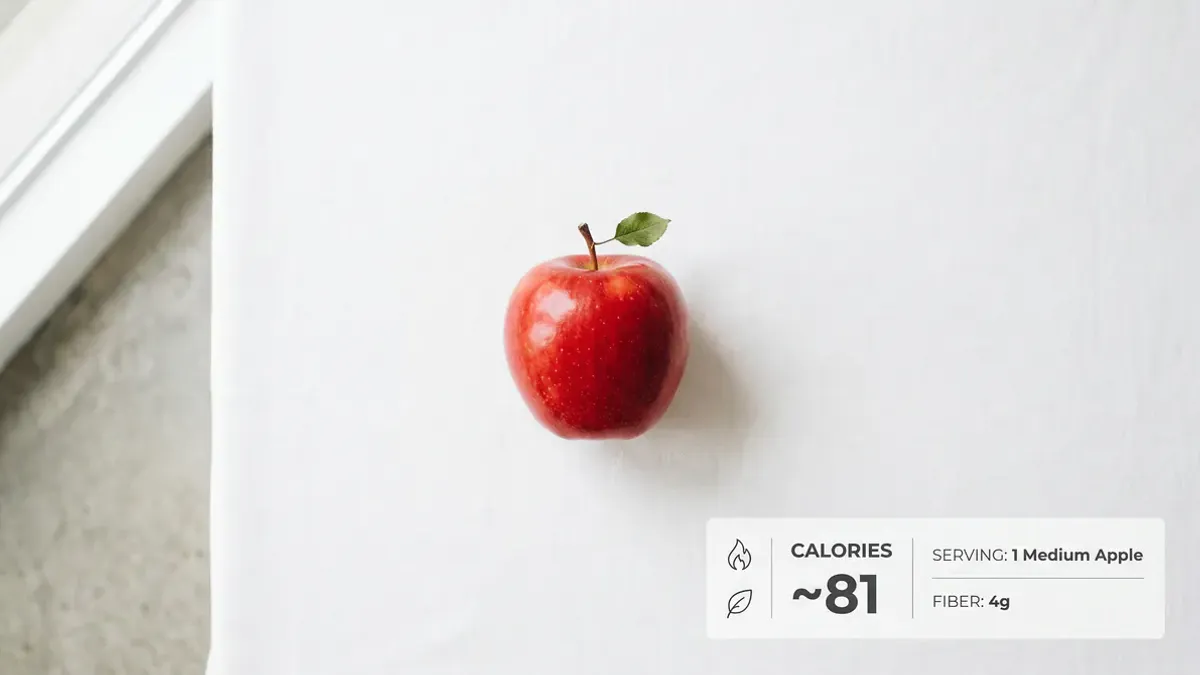
You grab an apple from the fruit bowl, take a bite, and wonder: how many calories am I actually eating? Apples are one of the most widely consumed fruits in the world, and for good reason. They are affordable, portable, and available year-round. But what exactly is inside that apple? Here you will find the full nutritional breakdown, how different apple varieties compare, and practical tips for fitting apples into a balanced eating pattern.
Key takeaways
- A medium apple (182 g) contains approximately 95 calories and 4.4 grams of fibre, according to USDA data.
- Apples are low in calories and high in pectin, a soluble fibre that promotes satiety.
- Granny Smith and Gala apples are among the lowest-calorie varieties at around 52 calories per 100 g.
- Most of the fibre and antioxidants are concentrated in the skin -- always eat your apple unpeeled.
- Apple juice is not a substitute for a whole apple: it lacks fibre and contains more sugar per serving.
- Health authorities recommend two servings of fruit per day for optimal nutrient intake.
How many calories are in an apple?
A medium-sized apple weighing approximately 182 grams contains about 95 calories. The majority of those calories come from natural sugars and carbohydrates, with very little fat or protein.
Here is the full nutritional breakdown per medium apple:
| Nutrient | Per apple (182 g) |
|---|---|
| Calories | 95 kcal |
| Carbohydrates | 25 g |
| Fibre | 4.4 g |
| Sugars | 19 g |
| Protein | 0.5 g |
| Fat | 0.3 g |
| Vitamin C | 14% DV |
Per 100 grams, apples contain approximately 52 calories. That makes them one of the most calorie-efficient fruits you can choose.
It is worth noting that portion sizes vary between countries. The USDA uses a 182-gram medium apple, while the Dutch Voedingscentrum defines a standard apple as 135 grams (76 kcal). When comparing nutrition data, always check which portion size is being used.
Which apple variety has the fewest calories?
Not all apples are created equal. The calorie content varies by variety, largely depending on sugar levels. Here is how the most common types compare per 100 grams:
- Granny Smith. About 52 kcal per 100 g. The most tart variety and consistently among the lowest in calories.
- Gala. About 52 kcal per 100 g. Mildly sweet with a crisp texture.
- Fuji. About 63 kcal per 100 g. The sweetest variety, with noticeably higher sugar content.
- Honeycrisp. About 52 kcal per 100 g. Popular for its balanced sweet-tart flavour.
- Pink Lady. About 57 kcal per 100 g. Firm and refreshing with moderate sweetness.
The difference between the lowest and highest calorie apple variety is roughly 11 kcal per 100 grams. In practice, this gap is negligible for daily intake. Pick the apple you enjoy most -- consistency matters more than optimising for the "perfect" variety.
Why are apples good for you?
Apples offer substantially more than just low calories. They provide a combination of fibre, antioxidants, and minerals that makes them a nutritional standout among fruits.
Pectin: the fibre that keeps you full
Apples are particularly rich in pectin, a soluble fibre. Pectin forms a gel in your stomach and small intestine, which slows gastric emptying. The result: you feel satisfied for longer after eating an apple. Research has shown that eating a whole apple is more satiating than drinking apple juice with the same amount of digestible carbohydrates -- precisely because of this fibre content.
Polyphenols and antioxidants
Apples contain polyphenols, plant compounds with antioxidant properties. These compounds are especially concentrated in the skin. Studies suggest that apple polyphenols may contribute to cardiovascular health. The old saying "an apple a day keeps the doctor away" is an oversimplification, but it is not entirely without scientific basis.
Vitamin C and potassium
A medium apple provides about 14 percent of the daily value for vitamin C and is a source of potassium, which supports normal blood pressure and muscle function.
How does an apple fit into your daily calories?
If you track your food intake, knowing where an apple fits in your daily energy budget is helpful. At roughly 95 calories per medium apple, it is a lightweight compared to most snack options.
For perspective:
| Snack | Calories |
|---|---|
| Medium apple (182 g) | 95 kcal |
| Granola bar | 140 kcal |
| Chocolate chip cookie | 200 kcal |
| Handful of almonds (30 g) | 170 kcal |
| Milk chocolate bar (45 g) | 240 kcal |
An apple is a smart choice as an afternoon snack, especially when you compare it to processed alternatives. Check our complete guide to calories in fruit to see how apples compare to other fruits.
Want a clearer picture of how many calories you need each day? Read our guide to daily calorie needs.
Peeled or unpeeled: does it matter?
Yes, it makes a meaningful difference. Eating an apple with the skin provides significantly more fibre and antioxidants than eating it peeled.
- Apple with skin (182 g). About 95 kcal and 4.4 g fibre.
- Apple without skin (170 g). About 77 kcal and 2.8 g fibre.
By peeling your apple, you lose roughly a third of the fibre and most of the concentrated polyphenols. For maximum nutritional benefit, eat the skin. Just wash the apple thoroughly under running water before eating.
Can apples help with weight management?
With approximately 95 calories and 4.4 grams of fibre per medium apple, apples are a practical ally if you are managing your weight. The combination of low energy density and high fibre content helps you feel full without consuming many calories.
Some practical tips:
- Eat a whole apple, not apple juice. Juice contains more sugar per serving and lacks the fibre. A glass of apple juice (250 ml) can contain 115 calories -- more than a whole apple.
- Use an apple as a snack. Replace a cookie or chocolate bar with an apple. You consume fewer calories and stay satisfied longer.
- Pair with a protein source. An apple with a handful of nuts or a slice of cheese creates a more balanced snack that sustains you longer through the combination of fibre and protein.
- Keep the skin on. That is where most of the fibre and antioxidants reside.
Looking for a structured approach to tracking what you eat? Our beginner's guide to calorie tracking walks you through the essentials.
Apple vs. other fruits: how does it compare?
To put the apple in context, here is a comparison with other popular fruits per 100 grams:
| Fruit | Calories per 100 g |
|---|---|
| Strawberries | 32 kcal |
| Watermelon | 30 kcal |
| Green kiwi | 61 kcal |
| Apple | 52 kcal |
| Banana | 89 kcal |
| Grapes | 67 kcal |
Apples sit in the middle range for fruit calories. Strawberries and watermelon are lighter, while bananas and grapes are higher. But calories are only part of the picture -- each fruit brings its own set of vitamins and minerals. See our complete fruit calorie chart for the full comparison.
Most dietary guidelines recommend two servings of fruit per day. A medium apple counts as one generous serving. Vary your fruit choices throughout the week for a broader range of nutrients.
Frequently asked questions about apples and calories
How many calories does a small apple have? A small apple (about 150 g) contains approximately 78 calories. Smaller apples are proportionally lower in calories, but the calorie density per 100 grams remains the same regardless of size.
Are apples good if you are watching your weight? Yes. With roughly 95 calories and 4.4 grams of fibre per medium apple, they are low in calories and high in satiating fibre. The pectin in apples may help you feel full for longer, making it easier to manage your overall calorie intake.
Do apples contain a lot of sugar? A medium apple contains about 19 grams of natural sugars. That is less than a banana (14 g per 100 g vs. 12 g per 100 g for bananas at equal weight) and comparable to most other fruits. These are naturally occurring sugars bound to fibre, which means they cause a slower rise in blood sugar than free sugars.
How many apples can you eat per day? Most health authorities recommend two servings of fruit daily. One apple counts as one serving. Vary with other fruits for a diverse nutrient intake.
Start paying attention to what you eat today
The apple is one of the simplest ways to add a healthy snack to your day. At just 95 calories per medium fruit, with a solid dose of fibre and antioxidants, it is a smart choice whether you are watching your weight or simply want to eat better.
Want to know exactly what is in your apple -- and everything else you eat? With Moveno, you take a photo of your food and instantly see the full nutritional breakdown, including calories, fibre, and more. No guessing required. Our complete guide to calorie counting explains how to make this effortless.