
Strict diets don't work — at least not long term. That's not just conventional wisdom; it's what the research shows. More than 80 percent of people who lose weight through a crash diet regain it fully within 1 to 5 years. The reason is structural: diets are temporary. Habits are permanent.
Key takeaways
- Small, sustainable behavioural changes are proven more effective than temporary diets
- Eating more slowly and with less distraction can reduce calorie intake by 10 to 20 percent
- Adequate sleep, stress management, and hydration have direct, measurable effects on weight
- You don't need to weigh every gram — awareness through app tracking or photo logging is enough
- Consistency over 12 weeks is more powerful than perfection over 2 weeks
- Implementing habits one at a time works far better than overhauling everything at once
Why diets so often fail
A diet demands willpower at every meal, every snack, every social occasion. That's exhausting. When motivation drops — after a stressful week, during holidays — the diet disappears with it.
Habits work differently. They run on autopilot, require minimal conscious effort, and persist even when motivation is low. The investment is front-loaded: building a new habit takes approximately 60 to 90 days. After that, it costs almost nothing to maintain.
15 proven habits for weight loss without dieting
1. Eat more slowly
It takes 15 to 20 minutes for your brain to receive the satiety signal from your stomach. Fast eaters consume more than they need before that signal arrives. Eating slowly — chewing deliberately, putting your fork down between bites — may reduce calorie intake by 10 to 15 percent without any sense of deprivation.
2. Use smaller plates
Larger plate equals larger portion — not because of a lack of self-control, but because of psychology. Research shows people eat an average of 16 percent more from large plates than smaller ones containing the same amount of food. Switching to a smaller plate is the easiest portion control method that exists.
3. Drink water before each meal
Drinking roughly 500 ml of water before a meal may reduce calorie intake at that meal by around 13 percent, according to research. Water fills the stomach, temporarily increases the feeling of fullness, and replaces calorie-containing drinks.
4. Sleep 7 to 9 hours per night
Sleep deprivation raises ghrelin (the hunger hormone) and lowers leptin (the satiety hormone). The result: more hunger, stronger cravings for calorie-dense food, and reduced impulse control. Sleep-deprived people eat an average of 300 to 500 extra calories per day. Better sleep is free weight loss.
5. Eat more protein at every meal
Protein is the most satiating macronutrient. Add a protein source to every meal: an egg at breakfast, Greek yoghurt as a snack, chicken breast or legumes at dinner. You'll naturally eat less without consciously restricting.
6. Cook at home more often
Home-cooked meals contain significantly fewer calories on average than restaurant or ready-made alternatives. You control ingredients, portion sizes, and cooking methods. Even simple home meals are typically far lighter than their restaurant equivalents.
7. Walk 8,000 to 10,000 steps daily
Daily movement burns calories and increases total energy expenditure without feeling like "exercise." Cycle for errands, take a longer route, use the stairs. See our full guide on walking for weight loss.
8. Eliminate liquid calories
Soft drinks, fruit juice, sports drinks, and full-fat lattes contain hundreds of calories your body doesn't register as food — they don't make you fuller. Replacing them with water, tea, or black coffee saves 200 to 500 calories per day effortlessly.
9. Eat more fibre
Fibre slows digestion, blunts blood sugar spikes after meals, and keeps you fuller for longer. Aim for 25 to 35 g per day through vegetables, fruit, legumes, and whole grains. An apple, a handful of walnuts, and a serving of lentils fill a large portion of that daily requirement.
10. Plan your meals in advance
Impulse purchases and last-minute decisions almost always lead to higher calorie intake. Knowing what you're eating tonight means buying exactly that — and nothing else. Meal prepping doesn't need to be complex: a weekly menu and a shopping list are enough.
11. Track what you eat
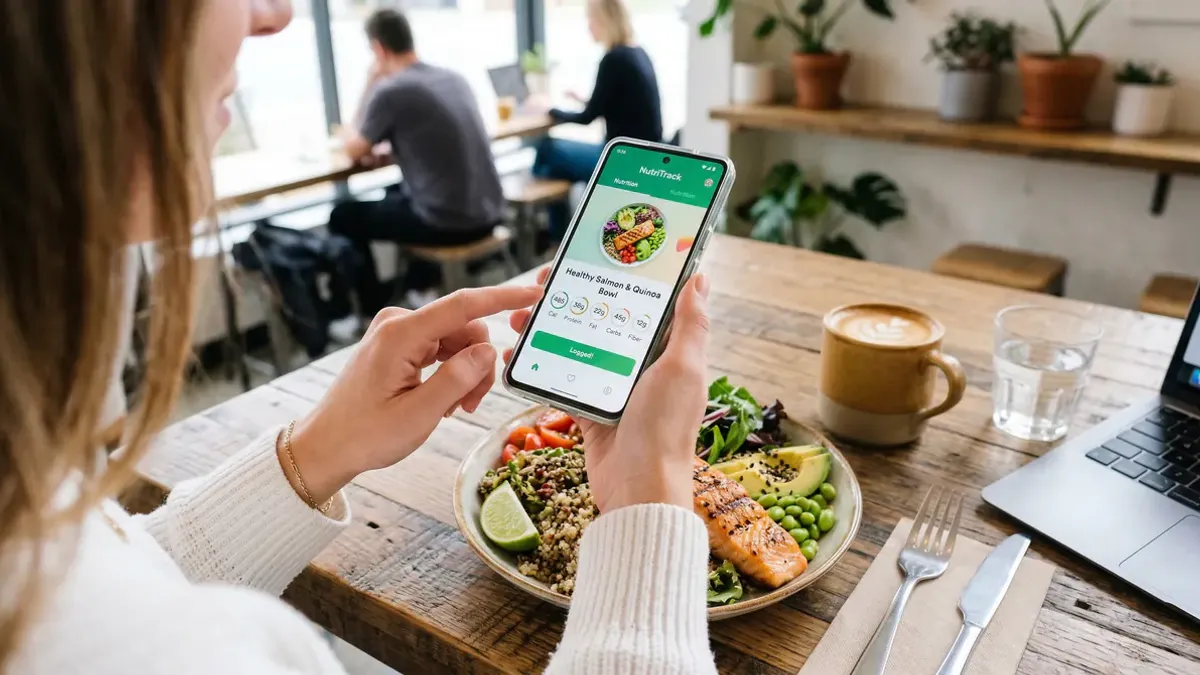
Awareness is the most powerful habit on this list. People who track their food lose significantly more weight on average than those who don't. You don't need to weigh every gram — a photo analysed by an AI app is enough for a reliable estimate.
Read our calorie tracking beginners guide to get started. With Moveno, photograph your meal and see the nutrition immediately — including home-cooked dishes.
12. Manage stress
Chronic stress raises cortisol, which promotes fat storage (particularly abdominal fat) and increases cravings for calorie-dense food. Stress management — exercise, mindfulness, adequate rest — is not optional; it's a direct component of weight management.
13. Fill half your plate with vegetables
Vegetables have low energy density: high volume, few calories. Filling half your plate with vegetables automatically reduces the calorie content of any meal without going hungry. Double the vegetables at dinner and you'll notice the difference within two weeks.
14. Reduce ultra-processed food
Crisps, biscuits, ready meals, and fried snacks are engineered to make you eat more than you intended. They bypass your satiety signals. Replace them with whole-food alternatives — nuts, fruit, rice with vegetables — and calorie intake drops automatically.
15. Be patient and consistent
This may be the hardest habit. Weight loss doesn't follow a straight line: there are plateaus, fluctuations, weeks of little visible progress. Most people quit exactly before results become visible.
Consistency over 12 weeks is more powerful than perfection over 2 weeks. Small daily choices compound into results that last.
Which habits should you start with?
Don't try to implement all 15 at once — that's a reliable path to overwhelm. Start with three habits that fit your current lifestyle:
Easy entry: smaller plates, water before meals, cut out soft drinks.
Higher impact: food tracking, more protein, cook at home more.
Long term: better sleep, stress reduction, daily movement.
Add one new habit every two weeks. After three months you'll have built a lifestyle that works — without ever going on a diet.
Also see our guide on how to lose weight fast if you want to understand the science behind these habits. Or start with our calorie tracking beginner's guide, calculate your calorie deficit, and use a food diary to make your habits visible.
And if you have a specific goal like losing 10 kilos, we have a detailed plan for that too.
Sources
- Mann, T. et al. (2007). Medicare's search for effective obesity treatments — American Psychologist. https://doi.org/10.1037/0003-066X.62.3.220
- Wansink, B. & Van Ittersum, K. (2013). Portion size me — Journal of Experimental Psychology. https://doi.org/10.1037/a0031987
- Davy, B.M. et al. (2008). Water consumption reduces energy intake at a breakfast meal — Journal of the American Dietetic Association. https://doi.org/10.1016/j.jada.2008.06.356
- Spiegel, K. et al. (2004). Sleep curtailment and leptin levels — Annals of Internal Medicine. https://doi.org/10.7326/0003-4819-141-11-200412070-00008