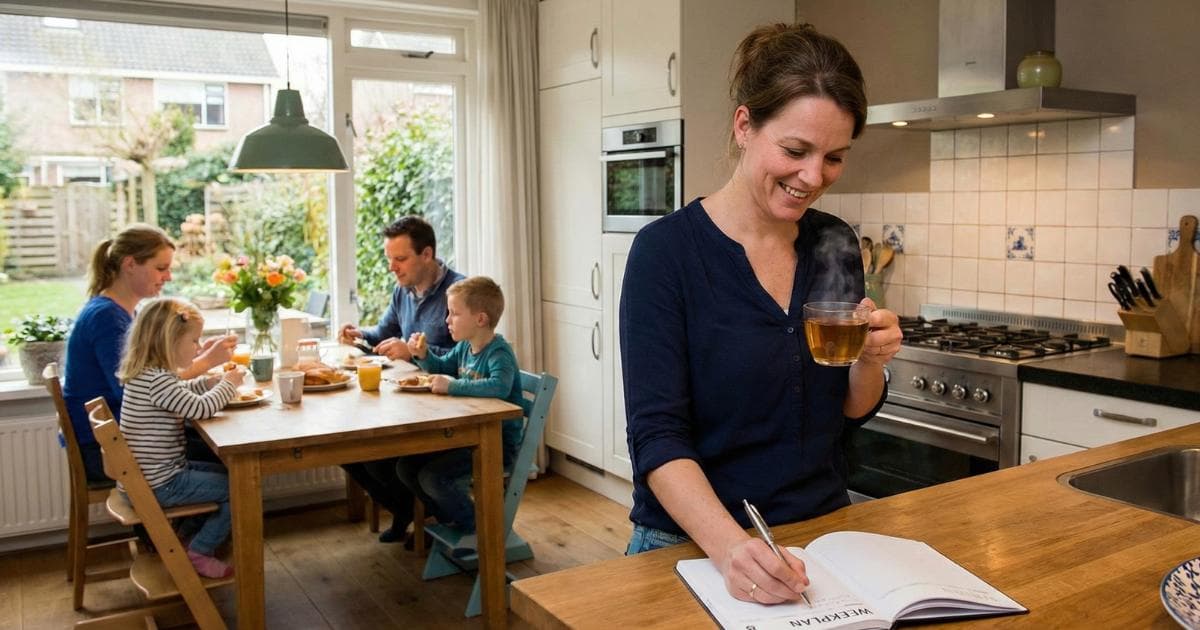
You are standing in the kitchen. Mashed potatoes with vegetables for four. Two kilos of potatoes, a kilo of kale, a splash of oil. You serve it up. Your partner gets a generous helping, your daughter a small plate, your son takes seconds. And you? You serve yourself something in between.
How many calories did you just eat? No idea.
This is the daily dilemma for anyone who cooks for the family while trying to track their own nutrition. Research shows that people underestimate their calorie intake by an average of 30 to 50 percent [1]. With family meals, the risk is even greater because you do not have a fixed portion.
The good news: you do not need to weigh every potato for every family member. There are six practical methods to track your own calories while cooking for the whole family as usual.
Why is calorie tracking so difficult with family meals?
Family meals combine three challenges you do not face when eating individually.
Variable portions. Your child eats half a plate, your partner takes seconds. Portions are never equal.
Unpredictable leftovers. Your child finishes half and leaves the rest. Or someone goes back for more. It is hard to predict who eats what.
Shared preparation. Everything goes in the same pot. The butter, the oil, the meat, the vegetables. How much fat ends up in your specific portion?
Research by Lichtman et al. (1992) found that even when subjects tried to track their food carefully, they underestimated their actual intake by an average of 47 percent [1]. That effect gets worse with meals you do not prepare individually.
The conclusion is clear: without a method, you are guessing. And guessing leads to significant errors. But the solution does not have to be complicated.
How many calories are in typical family meals?
Before you can track what you eat, you need to know how many calories are in your family recipes. Here is an overview of popular Dutch family meals, based on the NEVO database and the Voedingscentrum (Dutch Nutrition Centre) [2][3].
| Meal | Portion (grams) | Calories (kcal) |
|---|---|---|
| Boerenkool stamppot (no meat) | 400 | 328 |
| Boerenkool stamppot (with sausage) | 500 | 475 |
| Hutspot (carrot and potato mash) | 400 | 252 |
| Spaghetti bolognese | 400 | 484 |
| Spaghetti bolognese with cheese | 500 | 745 |
| Nasi goreng with egg | 350 | 504 |
| Macaroni dish | 450 | 558 |
| Oven dish (average) | 425 | 506 |
Note: these are average values. The amount of oil, butter, and meat you use determines whether your version is higher or lower. An extra tablespoon of butter (15 grams) adds 108 kcal. That is exactly why tracking is so valuable. Want to learn more about reading nutrition labels? Check out our article on understanding nutrition labels.
Method 1: weigh your own portion
This is the most accurate method. And it takes less time than you think.
How it works. You prepare the meal as you normally do. Before you eat, you put your plate on a kitchen scale and weigh what is on it. You note the weight and enter it in your tracker.
Example. You make boerenkool stamppot for four. You weigh your plate: 420 grams. The NEVO database shows that boerenkool stamppot without meat contains 82 kcal per 100 grams [2]. Your portion: 420 x 0.82 = about 344 kcal. Plus a smoked sausage of 100 grams (about 280 kcal). Total: 624 kcal.
Time investment. Two minutes per meal. You only weigh your own plate, not your family members' plates.
When to choose this. This works best when you are just starting out and want to learn your baseline portions. After two to three weeks, you will know most portions by heart.
Method 2: the leftovers method
Less precise than weighing, but much faster. Ideal if you do not want to use the kitchen scale every day.
How it works. You calculate the total calorie value of everything you put in the pot. Then you divide by the number of portions.
Example. You make nasi goreng for four:
| Ingredient | Amount | Calories (kcal) |
|---|---|---|
| Rice (uncooked) | 300 g | 1044 |
| Chicken breast | 400 g | 440 |
| Vegetables | 300 g | 75 |
| Oil | 30 ml | 270 |
| Eggs (2) | 120 g | 186 |
| Soy sauce, spices | 30 ml | 45 |
| Total | 2060 |
Divided equally into four portions: 515 kcal per person. But you eat more than your child. Estimate your portion at 120 percent of the average: 618 kcal. Your child at 70 percent: 360 kcal.
When to choose this. When you have a fixed repertoire of recipes and the ingredients stay the same.
Method 3: save recipes in your tracker
The smartest method for the long term. You do the work once and benefit for weeks.
How it works. You enter your ten to fifteen regular family recipes once in your calorie app, with the ingredients and your portion size. From that point on, you just select the recipe and fill in the portion.
Example. You make spaghetti bolognese every week. You entered the recipe once with all ingredients. Now you select "Spaghetti bolognese" in your tracker, indicate you ate 420 grams, and you are done.
Why this works. Research shows that most families rotate through 8 to 12 fixed recipes [4]. Once you have entered those, there is almost nothing left to do during the week.
When to choose this. When you have the patience to invest one hour in entering your recipes. The payoff afterward is enormous.
Method 4: cook your own portion separately
Sounds excessive. But for people with specific nutrition goals, this is the most reliable method.
How it works. You prepare the family meal as always. But you make your own portion separately in a different pot or container, with weighed ingredients.
Example. The family eats mashed potatoes with a generous amount of butter. You make your own portion with less butter and more vegetables. You know exactly what goes in.
When to choose this. When you are maintaining a specific calorie deficit and accuracy matters. Or when you have different nutritional needs than your family members, such as more protein or less fat.
Method 5: photograph and estimate
The fastest method. Less accurate, but good enough for most people.
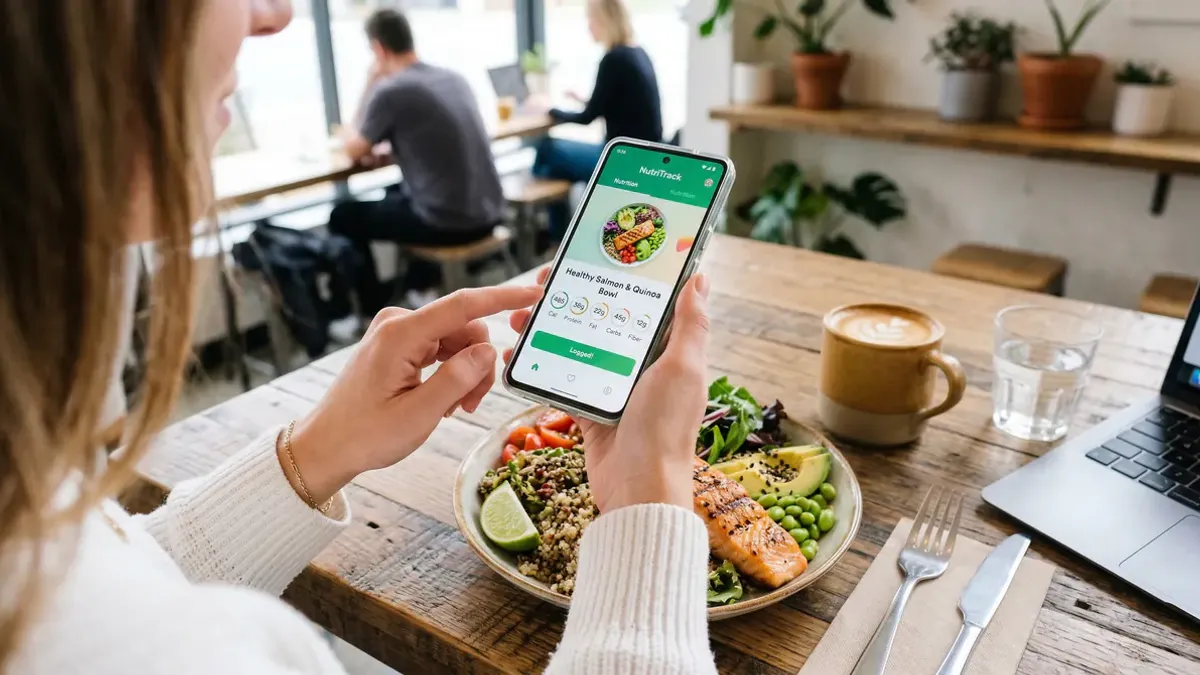
How it works. You take a photo of your plate before you eat. Later, you enter an estimate based on what you see. After a few weeks of practice, your estimates get increasingly accurate.
Example. You photograph your plate of hutspot. You see it looks similar to last time, when you weighed 380 grams. You enter 380 grams of hutspot: 238 kcal. Plus your meat portion of about 120 grams: 240 kcal. Total: about 478 kcal.
Research confirms this. A study by Lucassen et al. (2021) found that visual estimates of portion size had an average deviation of 30 percent from weighed portions [5]. That sounds like a lot, but if you track consistently and follow the trend, those errors average out over the week.
When to choose this. When speed matters more than perfection. And when you do not want to pull out the scale every day.
Method 6: combine methods throughout the week
In practice, you do not have to pick one method. Most parents combine them.
A realistic weekly schedule:
| Day | Method | Time investment |
|---|---|---|
| Monday | Weigh own portion | 2 minutes |
| Tuesday | Select saved recipe | 30 seconds |
| Wednesday | Photo and estimate | 1 minute |
| Thursday | Select saved recipe | 30 seconds |
| Friday | Weigh own portion | 2 minutes |
| Saturday | Photo and estimate | 1 minute |
| Sunday | Enter recipes for the week | 10 minutes |
Total per week: less than 20 minutes. That is less time than one episode of your favorite show.
What if my child does not finish their plate?
This is the question every parent asks. And the honest answer: it does not matter for your tracking.
You track what you eat. Not what your child eats. If your daughter leaves half her plate, that changes nothing about your calorie intake. Unless you eat it for her. And that is exactly the insight that tracking gives you.
Practical tips for leftovers:
- Store leftovers separately. Put them in a container for tomorrow instead of eating them.
- Serve small portions. Give your child a small plate with the option to take more.
- Count it if you eat it. Honest tracking means counting those two spoonfuls of your child's leftover mash.
The benefits of tracking when you cook for the family
After two to three weeks of consistent tracking, you notice four things.
1. You know your portions. You know your mash portion is always around 400 grams. And your partner's is closer to 500 grams.
2. You see patterns. You discover that on weekdays you are around 1800 kcal, but on weekends you drift toward 2400 kcal. That insight alone helps you make more conscious choices.
3. You make smarter choices. "A bit less oil in the nasi next time" saves 90 kcal per portion. Small adjustments, big difference over a month.
4. Your family does not notice. This might be the most important point. You track what you eat. Your family eats as usual. Nobody needs to diet. Nobody is restricted.
Start today: your first step
You only need one thing to get started: a kitchen scale. A good digital kitchen scale costs 10 to 15 euros and lasts for years.
Your first week:
- Day 1 to 3. Weigh your dinner portion. Note the weight and the calories.
- Day 4 to 5. Photograph your plate and compare with your weighed portions.
- Day 6 to 7. Enter your two most common recipes in your tracker.
After one week, you already have a good picture of your eating pattern. After a month, it feels automatic.
Want to make it even easier? At Moveno, we are building an app that recognises your food from a photo and automatically calculates the nutritional values using the NEVO database. Join the waitlist and get early access.
Frequently asked questions
How many calories are in an average family dinner?
A typical Dutch family dinner contains 400 to 600 kcal per adult portion. Boerenkool stamppot without meat is around 328 kcal (400 grams), while spaghetti bolognese with cheese can go up to 745 kcal (500 grams). The exact value depends on the ingredients, the preparation method, and your portion size.
Should I also track my children's calories?
No. Only track your own food. Children have different nutritional needs and are still growing. Do not put your children on calorie counting. If you have concerns about your child's eating habits, consult a paediatric dietitian.
How accurate do I need to be?
Perfection is not the goal. A deviation of 10 to 15 percent is perfectly acceptable. What matters is consistency: if you track in the same way every day, you can spot trends and adjust. That is more valuable than measuring everything to the gram once and giving up after that.
How do I prevent my family from feeling restricted?
By only tracking your own portion and not discussing it at the table. You weigh your plate, everyone else serves themselves as usual. Nobody needs to know you are tracking, unless you want to share.
Can I still track when we eat out or order takeaway?
Yes. Use the photo method and make an estimate. An average takeaway meal is between 600 and 900 kcal. It only becomes an issue if you do it five times a week. Estimating once or twice a week is fine.
Sources
- Lichtman SW, Pisarska K, Berman ER et al. (1992). Discrepancy between self-reported and actual caloric intake and exercise in obese subjects. N Engl J Med, 327(27), 1893-1898. PubMed
- RIVM (2023). NEVO-online: Dutch Food Composition Database. National Institute for Public Health and the Environment. NEVO-online
- Voedingscentrum (2024). Calorie Checker. Voedingscentrum
- Wolfson JA, Bleich SN (2015). Is cooking at home associated with better diet quality or weight-loss intention? Public Health Nutr, 18(8), 1397-1406. PubMed
- Lucassen DA, Brouwer-Brolsma EM, van de Wiel AM et al. (2021). The accuracy of portion size estimation using food images and textual descriptions of portion sizes: an evaluation study. J Hum Nutr Diet, 34(6), 945-956. PubMed