
Belly fat is stubborn — and it behaves differently from fat stored elsewhere on the body. You can spend months doing crunches and see little change around your waist, while losing weight in your face and arms. Understanding why requires a quick look at the biology behind fat storage.
Key takeaways
- Visceral fat surrounds your organs and raises risk of cardiovascular disease and type 2 diabetes
- Spot reduction is a myth — you cannot burn belly fat with abdominal exercises alone
- HIIT is more effective than steady-state cardio for reducing visceral fat
- Intermittent fasting with high protein intake reduces visceral fat by up to 33% more than caloric restriction alone
- A daily calorie deficit of 500–750 kcal is the evidence-based baseline for sustainable fat loss
- Chronic stress elevates cortisol, which directly promotes visceral fat storage
Two types of fat — one is far more dangerous
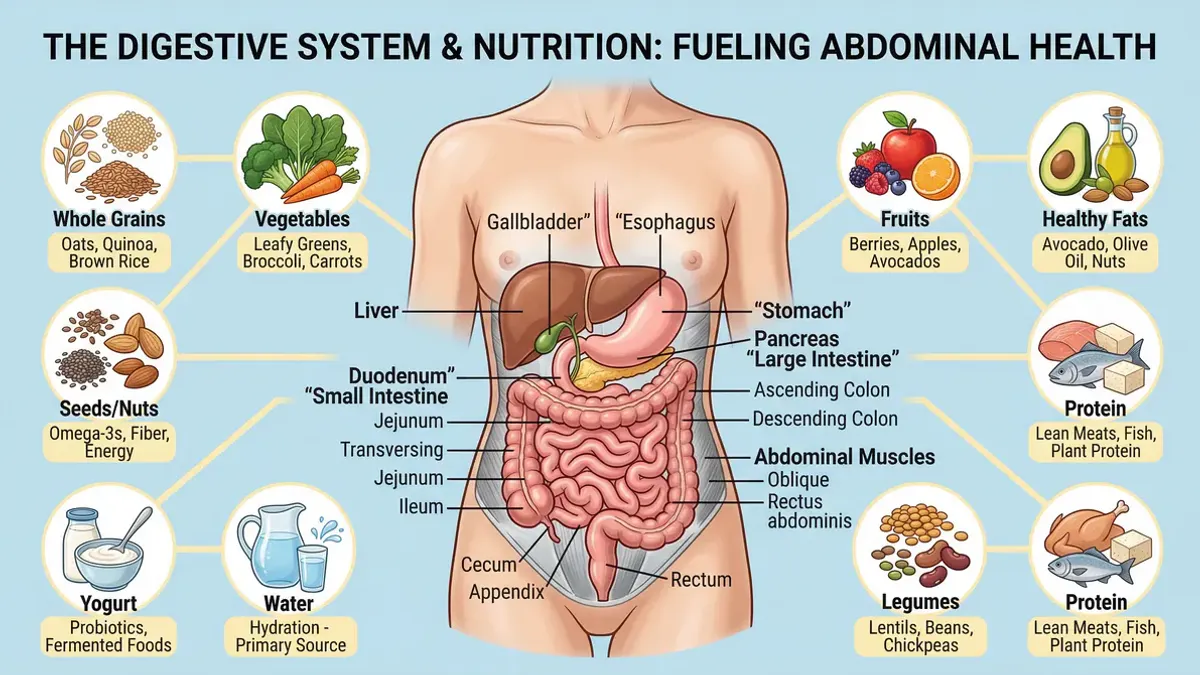
Not all body fat is equal. Subcutaneous fat sits just beneath the skin — the kind you can pinch. Visceral fat is packed deep around your organs: liver, pancreas, intestines. This second type is metabolically active, meaning it produces inflammatory compounds and hormones that impair insulin sensitivity and raise the risk of heart disease, type 2 diabetes, and certain cancers.
Waist circumference is a practical proxy. Above 88 cm for women or 102 cm for men signals elevated health risk, according to clinical guidelines. But waist size alone doesn't tell you the ratio of subcutaneous to visceral fat — that requires imaging.
Why spot reduction doesn't work
The fitness industry has long sold the idea that you can target belly fat with core exercises. The evidence says otherwise. When your body draws on fat for energy during a calorie deficit, it decides where to pull from based on hormones and genetics — not which muscles you happened to train that day.
What does work: reducing total body fat percentage. That requires a calorie deficit combined with a training approach that preserves muscle mass and maximises fat oxidation.
HIIT for visceral fat reduction
High-Intensity Interval Training alternates short bursts of intense effort with active recovery. Beyond the calories burned during the session, HIIT triggers excess post-exercise oxygen consumption (EPOC) — your metabolism stays elevated for hours afterward.
Research consistently shows HIIT outperforms steady-state cardio for visceral fat reduction, even when total exercise time is shorter. Three to four sessions of 20–30 minutes per week can produce measurable reductions in waist circumference. If you want to understand how tracking your intake supports this process, our calorie tracking beginner's guide is a solid starting point.
What intermittent fasting does to belly fat
Intermittent fasting (IF) — typically a 16-hour fast followed by an 8-hour eating window — has shown consistent results for visceral fat reduction across multiple randomised controlled trials. A meta-analysis published in Nutrition Journal (2025) found that IF combined with high protein intake led to 33% greater visceral fat loss compared to standard caloric restriction.
One nuance worth noting: visceral fat can adapt to repeated fasting cycles, becoming more resistant to fatty acid release over time. Periodically varying your fasting protocol or combining it with resistance training may help counter this adaptation.
Diet patterns that reduce visceral fat
What you eat shapes where fat is stored. Refined carbohydrates and added sugars spike insulin levels, which promotes fat deposition in the abdominal region. Trans fats — still present in many processed foods — are independently associated with greater visceral fat accumulation.
Soluble fibre (oats, legumes, flaxseed) slows digestion and blunts the insulin response. Adequate protein — 1.6 to 2 grams per kilogram of body weight (see our guide on how much protein per day) — increases satiety, protects lean mass during a deficit, and has a higher thermic effect than carbohydrates or fat. For a full breakdown of how to calculate your personal calorie target, see our calorie deficit calculator guide.
Cortisol and stress-driven belly fat
Chronic stress is an underappreciated driver of visceral fat accumulation. Elevated cortisol promotes fat storage around the abdomen while simultaneously increasing cravings for high-calorie, high-fat foods. Poor sleep compounds the problem — sleep deprivation disrupts hunger hormones (ghrelin and leptin) and elevates baseline cortisol.
Seven to nine hours of quality sleep per night, regular moderate exercise, and stress-reduction practices (mindfulness, breathing exercises, adequate recovery) have all been shown to lower cortisol levels. This is physiology, not lifestyle advice. To understand how stress affects weight more broadly, read our article on losing weight during stress.
What doesn't work
Fat-burning supplements, waist trainers, juice cleanses, and very-low-calorie crash diets all fail to address visceral fat specifically. Extreme deficits trigger muscle loss and metabolic adaptation — the mechanism behind yo-yo cycling. Topical creams and electrical stimulation belts have no credible evidence for fat reduction.
A practical strategy
The most effective approach combines three elements: a moderate calorie deficit of 500–750 kcal per day, protein intake at the higher end of recommendations, and regular exercise with at least two resistance training sessions per week. You don't need to be perfect. Consistency over months matters far more than intensity over days.
Tracking what you eat removes guesswork. Moveno lets you photograph a meal and get instant nutritional data — no manual logging required.
For a deeper look at what foods specifically help burn belly fat, see our guide on belly fat and nutrition.
Sources
- Arciero PJ et al. (2023). Intermittent fasting and protein pacing are superior to caloric restriction for weight and visceral fat loss. Obesity. https://pubmed.ncbi.nlm.nih.gov/36575144/
- Cleveland Clinic (2024). Visceral Fat: What It Is & How It Affects You. https://my.clevelandclinic.org/health/diseases/24147-visceral-fat
- Nutrition Journal (2025). The impact of intermittent fasting on body composition and cardiometabolic outcomes. https://link.springer.com/article/10.1186/s12937-025-01178-6
- NHLBI (2024). Clinical guidelines on overweight and obesity in adults. https://www.nhlbi.nih.gov/sites/default/files/publications/06-5830.pdf