Bloating, abdominal pain, unpredictable digestion — these are the daily realities for people living with irritable bowel syndrome (IBS). The low-FODMAP diet was developed specifically as a response: not a trendy eating pattern, but a structured, evidence-based protocol designed to identify which fermentable carbohydrates trigger gut symptoms. This guide explains what FODMAPs are, how the three-phase approach works, and which foods to eat and avoid during the elimination phase.
Key takeaways
- FODMAP stands for Fermentable Oligosaccharides, Disaccharides, Monosaccharides, and Polyols — specific carbohydrates that can trigger gut symptoms in people with IBS
- The diet has three phases: elimination (2–6 weeks), reintroduction (6–8 weeks), and personalisation (ongoing)
- During elimination, onion, garlic, wheat, certain fruits, legumes, and regular dairy are avoided
- The goal is diagnostic — identifying your personal FODMAP triggers, not eliminating all FODMAPs permanently
- Around 70–80% of IBS sufferers experience significant symptom relief on a low-FODMAP diet
- A dietitian specialising in gut health is strongly recommended, particularly for the reintroduction phase
What are FODMAPs?
FODMAP is an acronym for a group of fermentable carbohydrates: Fermentable Oligosaccharides, Disaccharides, Monosaccharides, and Polyols. These carbohydrates share a common characteristic: they are poorly absorbed in the small intestine, travel intact to the large intestine, and are fermented by gut bacteria. This fermentation produces gas and draws water into the bowel — triggering the bloating, cramping, diarrhoea, and constipation characteristic of IBS.
People without IBS typically tolerate FODMAPs without issue. In IBS sufferers, the gut is hypersensitive to the gas production and pressure changes that fermentation causes. Reducing FODMAP intake reduces the fermentation load, and with it, the symptoms.
The five FODMAP groups
Oligosaccharides (Fructans and GOS): onion, garlic, wheat, rye, legumes, leek. These are the most commonly identified IBS triggers.
Disaccharides (Lactose): regular milk, soft fresh cheese, yoghurt, ice cream. The amount of lactose matters — hard aged cheeses are typically low in lactose.
Monosaccharides (Excess fructose): honey, mango, apple, pear, watermelon, agave nectar. Fructose is only a FODMAP issue when the fructose-to-glucose ratio exceeds 1:1.
Polyols (Sugar alcohols): cherries, plums, avocado (small amounts), mushrooms, and artificial sweeteners including sorbitol, mannitol, xylitol, and maltitol.
The three phases of the FODMAP diet
Phase 1: Elimination (2–6 weeks)
All high-FODMAP foods are removed from the diet as completely as possible. This phase is diagnostic, not permanent. If symptoms improve significantly — and they typically do in 70–80% of IBS sufferers — it confirms that FODMAPs are a trigger for your gut.
The stricter the elimination, the more informative the outcome. Hidden FODMAP sources are the main pitfall: garlic powder in stock cubes, onion in pre-made soups, lactose in commercial bread, and sorbitol in sugar-free chewing gum can all undermine the phase without the person realising.
Low-FODMAP foods to eat during elimination:
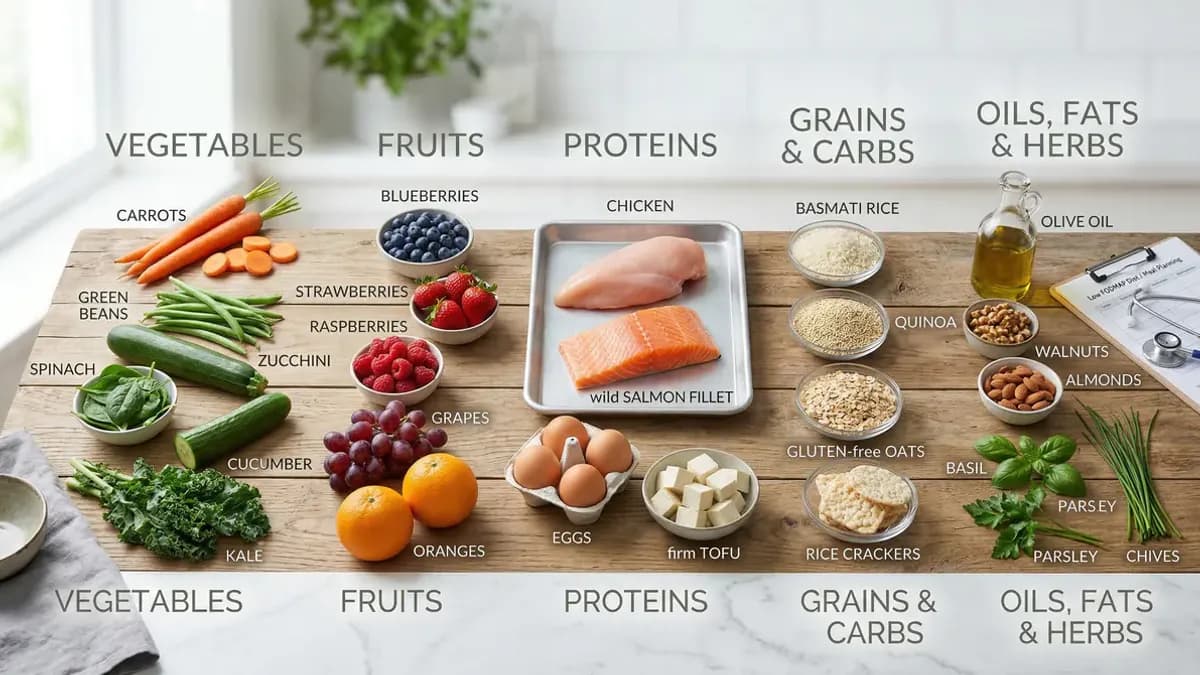
- Vegetables: cucumber, bell peppers, zucchini, spinach, carrots, potatoes, small amounts of cherry tomatoes, eggplant, bok choy
- Fruit: strawberries, grapes, oranges, mandarins, kiwi, pineapple, firm ripe banana, cantaloupe melon
- Proteins: meat, poultry, fish, eggs, firm tofu, tempeh
- Grains: rice (all types), gluten-free pasta, gluten-free oats, polenta, quinoa
- Dairy: hard cheeses (cheddar, Parmesan, Gouda), lactose-free milk and yoghurt, unsweetened almond milk
- Nuts: macadamia, pecans, walnuts (small amounts)
Phase 2: Reintroduction (6–8 weeks)
After the elimination phase establishes a symptom-free or significantly improved baseline, each FODMAP group is reintroduced individually — one group at a time, with two to three-day gaps between tests. This systematic approach identifies which specific groups trigger your symptoms, and at what quantities.
The reintroduction process is detailed and benefits significantly from dietitian support. Testing one group at a time and returning to a strict low-FODMAP diet between tests is essential for accurate results.
Phase 3: Personalisation (ongoing)
Based on reintroduction findings, you build a personalised eating pattern that eliminates or limits only your identified triggers. Most people end up with a significantly broader diet than during elimination — they may tolerate lactose but react to fructans, or handle small amounts of fructose without issue.
This phase is sustainable long-term because it is tailored to your specific digestive profile rather than based on a generalised restriction list.
Low-FODMAP food list
Vegetables (low-FODMAP)
Cucumber, bell peppers (red, green, yellow), zucchini, spinach, kale, carrots, potatoes, small amounts of cherry tomatoes, eggplant, bamboo shoots, bok choy, green beans.
Fruit (low-FODMAP)
Strawberries, grapes, oranges, mandarins, lime, lemon, kiwi, pineapple, cantaloupe melon, firm ripe banana, passion fruit.
Grains
Rice (all varieties), gluten-free pasta, gluten-free oats, cornflour, polenta, quinoa, sourdough spelt bread (maximum 1 slice — spelt fermentation reduces fructan content).
Dairy
Hard cheeses (cheddar, Gouda, Parmesan), Brie, Camembert, lactose-free milk and yoghurt, small amounts of tinned coconut milk (unsweetened), rice milk, unsweetened almond milk.
Proteins
All unprocessed meat, fish, and poultry, eggs, firm tofu, tempeh.
What to avoid during elimination
High-FODMAP vegetables: onion, garlic, leek, shallot, spring onion (white part), asparagus, artichoke, large amounts of cauliflower and mushrooms.
High-FODMAP fruit: apple, pear, mango, watermelon, apricot, nectarine, plum, cherries, figs, blackberries.
High-FODMAP grains: wheat, rye, barley as main ingredients — regular pasta, bread, crackers, couscous.
High-FODMAP dairy: regular milk, soft fresh cheeses, cottage cheese, ice cream, regular yoghurt.
Other triggers: honey, agave, lactitol, sorbitol, mannitol, xylitol (found in sugar-free gum and sweets), legumes (chickpeas, lentils, kidney beans).
Practical tips for the elimination phase
Read every label — garlic and onion powder appear in stock cubes, crisps, soups, marinades, and spice mixes. Cook from scratch as much as possible during the elimination phase. Eat enough fibre through low-FODMAP vegetables, rice, and oats — the FODMAP diet is not a low-fibre diet. Carry safe snacks when eating out: rice cakes, hard cheese, a banana, or a handful of macadamia nuts.
Tracking what you eat and how you feel afterward is particularly valuable during FODMAP elimination. A food diary — digital or paper — helps you identify patterns and gives you useful data to bring to your dietitian. Photo-based logging works well for this; scan your meals and add a brief symptom note alongside. Our beginner's guide to calorie tracking explains the basics of food logging, which applies here even though the goal is symptom tracking rather than calorie counting.
Who is the FODMAP diet for?
The low-FODMAP diet was developed by researchers at Monash University, Australia, specifically for IBS. Clinical trials consistently show that around 70 to 80 percent of IBS sufferers experience meaningful symptom reduction during the elimination phase. This makes it one of the most effective dietary interventions for functional gut disorders.
The diet is not designed for weight loss, and people without IBS or gut symptoms have nothing to gain from it. If you are unsure whether you have IBS, discuss your symptoms with a doctor before starting.
Why professional support matters
The FODMAP diet is significantly more complex than most eating patterns. The three-phase structure requires precision, and the risk of unnecessary restriction — eliminating foods you actually tolerate — is real without systematic reintroduction. A dietitian specialising in gut health can guide food choices, structure the reintroduction properly, and help you build a sustainable diet after the protocol is complete. Monash University's FODMAP app is a well-validated tool for checking individual foods during the process.
For a different approach to nutrition and weight management, see our keto diet guide or our calorie deficit guide. If your goal is weight management alongside gut health, tracking your calories for weight loss alongside FODMAP compliance is possible — the two approaches are not mutually exclusive.
Sources
- Gibson PR, Shepherd SJ. Evidence-based dietary management of functional gastrointestinal symptoms: The FODMAP approach. Journal of Gastroenterology and Hepatology, 2010. https://doi.org/10.1111/j.1440-1746.2009.06149.x
- Halmos EP et al. A diet low in FODMAPs reduces symptoms of irritable bowel syndrome. Gastroenterology, 2014. https://doi.org/10.1053/j.gastro.2013.09.046
- Staudacher HM et al. Comparison of symptom response following advice for a diet low in fermentable carbohydrates (FODMAPs) versus standard dietary advice in patients with irritable bowel syndrome. Journal of Human Nutrition and Dietetics, 2011. https://doi.org/10.1111/j.1365-277X.2011.01162.x
- Marsh A et al. Does a diet low in FODMAPs reduce symptoms associated with functional gastrointestinal disorders? Alimentary Pharmacology & Therapeutics, 2016. https://doi.org/10.1111/apt.13499
- Monash University FODMAP Diet App. https://www.monashfodmap.com